Goldman Sachs and Morgan Stanley: A High-Stakes Earnings Season for Wall Street’s Finest

Preview the upcoming Q2 2025 earnings for Goldman Sachs and Morgan Stanley. Explore key themes, strategic differences, and what investors should watch as Wall Street’s top banks report.

TL;DR – Two Different Engines, One Market Test

As Goldman Sachs and Morgan Stanley prepare to report their second-quarter results, investors are watching closely to see how two of Wall Street’s most iconic firms are navigating a shifting macro environment. While Morgan Stanley has leaned into wealth management as its long-term growth pillar, Goldman continues to reposition itself after a retreat from consumer banking and a volatile stretch in investment banking. The upcoming earnings will offer a fresh look at which model is winning in 2025—and whether either name is undervalued relative to its forward potential.


Q1 Recap: Strategic Divergence on Full Display

In the first quarter of 2025, the divergence in strategy between these two institutions became increasingly evident. Goldman Sachs delivered better-than-expected results, driven largely by strength in its global markets division—particularly fixed income and commodities trading. While investment banking revenues remained muted, the firm’s Asset and Wealth Management segment showed encouraging growth, quietly contributing to earnings stability amid broader volatility.

Morgan Stanley, in contrast, leaned into its now-dominant wealth management franchise, which continues to anchor its earnings with more predictable, fee-based income. Trading revenues were healthy, though less volatile than Goldman’s, and investment banking activity remained sluggish. The integration of E*TRADE and Eaton Vance appears to be progressing, but margins continue to be scrutinized by analysts who want to see more operating leverage.

Both stocks have tracked broader market gains this year, aided by rising investor sentiment and increased risk appetite. However, the strong run-up in equity markets sets a higher bar for Q2 performance—and makes any shortfall more likely to trigger a valuation reset.


Q2 2025 Preview: Key Themes to Watch

📈 1. Investment Banking Activity and the M&A Pipeline

The long-awaited recovery in deal activity has been uneven, but early signs point to a modest thaw in M&A and equity underwriting markets. Investors will want to see whether either bank is capturing greater wallet share as clients cautiously return to the table. Goldman, with its deep advisory bench, may be positioned to benefit from any early rebound.

💼 2. Wealth Management Profitability and Scale

Morgan Stanley’s wealth business, now a cornerstone of its strategy, remains in focus—particularly operating margins and net new assets. Investors will look for signs that scale advantages from prior acquisitions are beginning to deliver incremental earnings leverage. Conversely, any slip in cost discipline or fee compression could raise concerns about future growth.

📊 3. Trading Performance and Market Volatility

With macro volatility subsiding somewhat in Q2, trading desks may face tougher year-over-year comps. Goldman’s exposure to fixed income and commodities could give it an edge in any remaining dislocations. Morgan Stanley’s more balanced exposure may serve it well in calmer markets, but could also limit upside if activity is muted.

🏦 4. Strategic Repositioning at Goldman

Goldman’s exit from its consumer ventures continues to unfold, and the second quarter may offer further updates on its plans to streamline operations and refocus capital. While these efforts have weighed on sentiment in the past, clarity and discipline in execution could turn the narrative more constructive.

💰 5. Capital Return and CET1 Management

Both firms are expected to comment on their capital return strategies following the latest Fed stress test results. Goldman has historically been more aggressive with buybacks, while Morgan Stanley may emphasize stability and capital preservation. Investors will weigh these decisions against current payout ratios and the firms’ risk-weighted asset profiles.


SWOT Analysis: Comparing Strategic Profiles

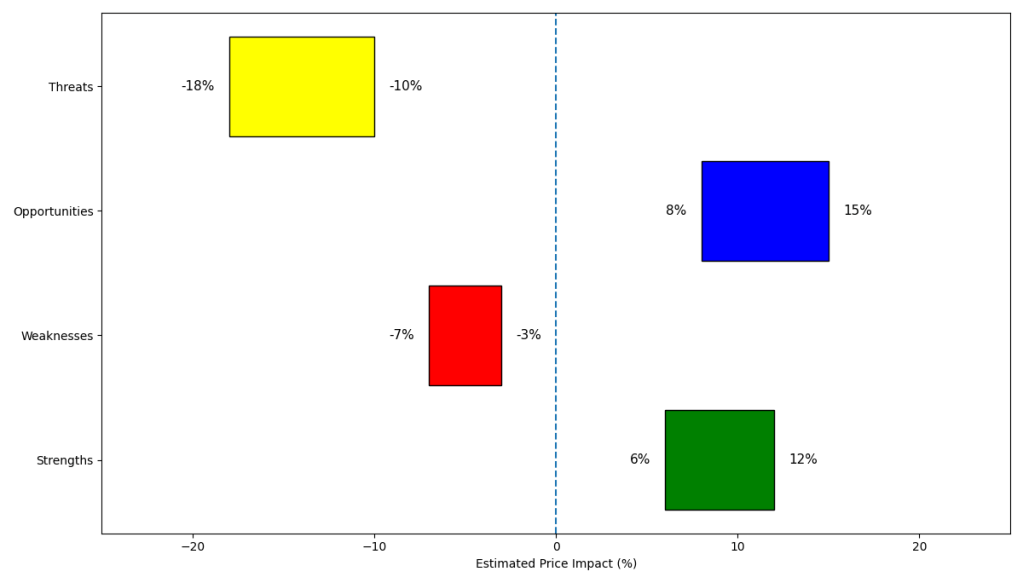
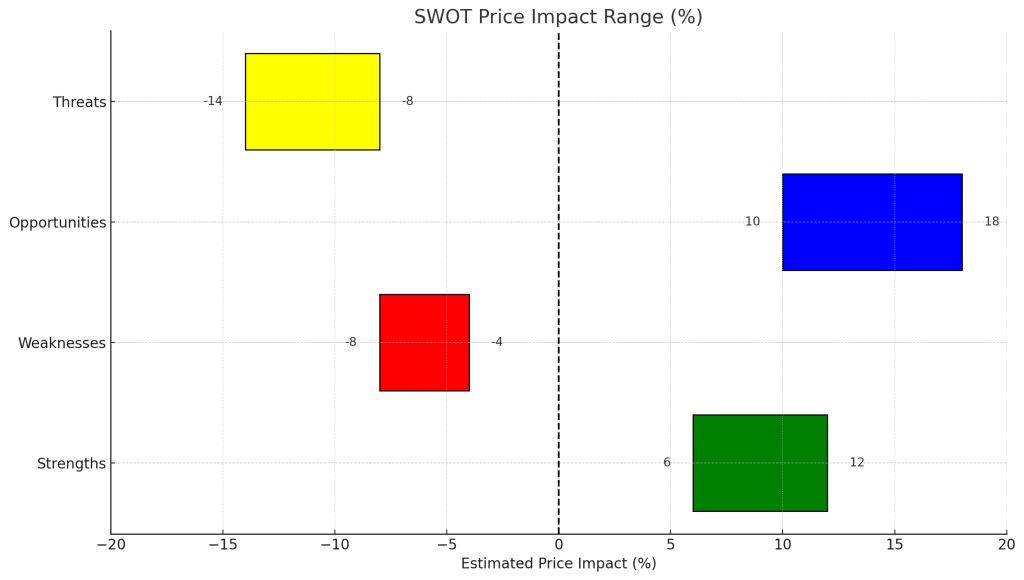
SWOT analysis table comparing Goldman Sachs and Morgan Stanley ahead of Q2 2025 earnings, highlighting strengths, weaknesses, opportunities, and threats for each firm.

Valuation in Context: Discounted for Uncertainty

From a valuation perspective, both firms trade at a discount to their historical averages, reflecting persistent questions around the pace of recovery in core businesses.

  • Goldman Sachs (GS) is currently trading at approximately 11.2x forward earnings, a discount that arguably reflects both the overhang from its consumer pivot and cyclical risk in trading and advisory.
  • Morgan Stanley (MS) commands a higher multiple, at around 13.3x forward earnings, underpinned by the predictability of its wealth franchise and a more balanced revenue base.

However, if investment banking activity accelerates meaningfully in the second half of the year, Goldman may be poised for a multiple re-rating. Conversely, if market volatility diminishes further, Morgan Stanley’s stable income streams may prove more defensive.


Bottom Line: Different Models, Same Market Test

As both firms head into Q2 earnings, the contrast between Goldman’s capital markets orientation and Morgan Stanley’s wealth-driven stability will once again be on full display. Investors will be looking not only for solid headline numbers, but for forward guidance that supports each firm’s strategic trajectory. Whether it’s Goldman’s return to its core strengths or Morgan Stanley’s steady ascent in fee-based income, the upcoming results could significantly shift investor sentiment—and relative valuations—for the rest of the year.


Stay Ahead of the Curve

📩 Subscribe to SWOTstock.com for full earnings recaps, updated SWOT profiles, and revised valuation scenarios for both Goldman Sachs and Morgan Stanley—posted immediately after earnings are released.


Disclaimer

This article is for informational purposes only and does not constitute financial advice or a recommendation to buy or sell any securities. Always perform your own due diligence or consult a licensed financial advisor before making investment decisions.


Leave a comment


Micron Is Back in the Game: Q3 2025 Proves AI Demand Is Real — But Is the Stock Still a Buy?

Micron’s Q3 FY2025 earnings reveal a strong AI-driven rebound with record DRAM sales, margin expansion, and rising profitability. Explore our SWOT analysis, valuation scenarios, and stock price outlook based solely on official financials and management commentary.

TL;DR Summary

Micron (NASDAQ:MU) reported blockbuster Q3 FY2025 earnings, fueled by explosive growth in AI memory demand — especially for high-bandwidth memory (HBM), which exceeded $1 billion for the quarter and is already sold out for 2025. With EPS of $1.91 and Q4 guidance pointing even higher, Micron is making a strong case for a rerating. Our updated fair value estimate is $135.50, implying modest upside from current levels, but more importantly, confirming Micron’s transition from cyclical to structural relevance in the AI build-out.


Quarter Recap: A Turning Point in the Cycle

For years, Micron has lived and died by the memory cycle. But Q3 FY2025 feels different. The company reported its highest-ever quarterly revenue at $9.3 billion, a 37% year-over-year increase. DRAM led the charge, generating $7.1 billion, while HBM demand — largely driven by AI servers — grew over 50% quarter-over-quarter and surpassed $1 billion for the first time. Management confirmed that all HBM supply is committed through the end of 2025, signaling not just demand, but pricing power.

Gross margin came in at 39% (non-GAAP), and EPS surged to $1.91, up from a loss just one year ago. More importantly, free cash flow turned decisively positive at $1.95 billion, providing flexibility for both investment and shareholder return.

Micron also reaffirmed its long-term strategic positioning with a $200 billion commitment to U.S. manufacturing and R&D under the CHIPS Act. This isn’t just a bounce-back quarter — it looks like a foundation for a new phase of sustained growth.

Line chart showing Micron’s revenue and net income over the past five quarters. Revenue steadily rises from $3.75 billion in Q3 FY24 to $9.30 billion in Q3 FY25. Net income starts at –$1.9 billion, remains negative until Q1 FY25, then turns positive in Q2 FY25 and reaches $1.89 billion in Q3 FY25. The chart includes a horizontal dashed line at zero to mark the breakeven point.

What’s Fueling the Momentum?

The key driver is unmistakably AI. As hyperscalers expand their infrastructure to support large language models and enterprise AI deployments, demand for advanced memory — particularly HBM and DDR5 — has exploded. Micron’s unique position as one of just a few players in this space is enabling it to lock in customers at strong margins.

But it’s not just the top line that’s improving. Operating leverage is finally kicking in. Inventory days are falling, CapEx is normalizing, and the company’s balance sheet is healthy with over $27.9 billion in total liquidity. For growth investors watching this space, Micron is beginning to look like a structurally profitable company, not just a cyclical memory supplier.

Stacked bar chart showing Micron’s DRAM and NAND revenue over the last five quarters. DRAM revenue increases from $2.75 billion in Q3 FY24 to $7.10 billion in Q3 FY25. NAND revenue grows from $1.00 billion to $2.20 billion over the same period. DRAM consistently contributes the larger share of total revenue, with a noticeable acceleration starting in Q1 FY25

SWOT Analysis: Breaking Down the Fundamentals

Rather than relying on sentiment or social media buzz, let’s unpack the key forces driving Micron’s stock — both good and bad — based on official data and management commentary.

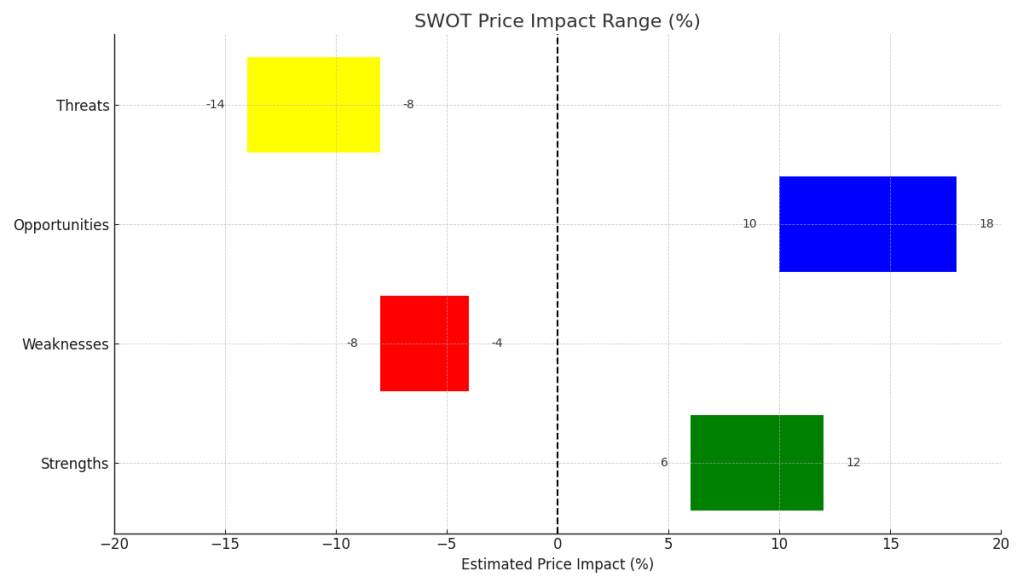
Bar chart showing estimated stock price impact ranges for Micron Q3 FY2025 by SWOT category. From top to bottom: Strengths range from +15 to +25 USD, Weaknesses from –10 to –5 USD, Opportunities from +10 to +20 USD, and Threats from –15 to –10 USD. Bars are color-coded green, red, blue, and yellow respectively. The x-axis ranges from –20 to 25 USD per share, indicating estimated contribution to Micron’s stock price from each factor.

Strengths (+$15 to +25/share)

Micron’s execution in AI memory is the real story. HBM revenue not only topped $1B but is fully booked through next year. The 1-gamma DRAM node — with 30% density and 20% power improvements — is entering early production, providing a margin and performance edge.

Weaknesses (–$5 to –10/share)

Despite DRAM’s strength, NAND continues to underperform (+4% YoY), and high CapEx levels weigh on near-term cash conversion. There’s also concentration risk — a handful of cloud customers drive a significant portion of revenue.

Opportunities (+$10 to +20/share)

With CHIPS Act funding unlocking domestic capacity and HBM4 set to launch, Micron has multiple ways to extend its lead. If FY26 EPS trends toward $3.00, the market may rerate MU toward a higher earnings multiple.

Threats (–$10 to –15/share)

AI cycles are notoriously hard to predict. Any slowdown in server buildouts, export restrictions to China, or aggressive pricing from Samsung and SK Hynix could compress Micron’s margins and reduce upside.

📊 Micron Q3 FY2025 SWOT Summary

SWOT summary table for Micron Q3 FY2025 showing four categories: Strengths include HBM leadership and margin recovery with an estimated impact of +15 to +25 USD/share; Weaknesses include NAND underperformance and high CapEx with an impact of –5 to –10 USD/share; Opportunities highlight the HBM4 ramp and CHIPS Act subsidy with +10 to +20 USD/share impact; Threats note China risk and competitive pricing pressure with –10 to –15 USD/share impact.

Valuation Scenarios: Calculating What It’s Worth

Based on Micron’s own forward guidance, historical multiples, and a fair risk-adjusted outlook, here’s how we frame the valuation:

Valuation scenarios table for Micron Q3 FY2025. The bullish case assumes $3.00 EPS and 20× P/E for a $160 target, with 30% probability and $48 weighted value. The base case uses $2.50 EPS and 18× P/E for a $135 target, with 50% probability and $67.50 weighted value. The bearish case assumes $2.00 EPS and 15× P/E for a $100 target, with 20% probability and $20 weighted value. The probability-weighted fair value estimate is $135.50 per share.

🎯 Fair Value Estimate:

$48.00 + $67.50 + $20.00 = → $135.50/share
📉 Current Price (as of June 26): ~$127.25
📈 Implied Upside: ~6.5%

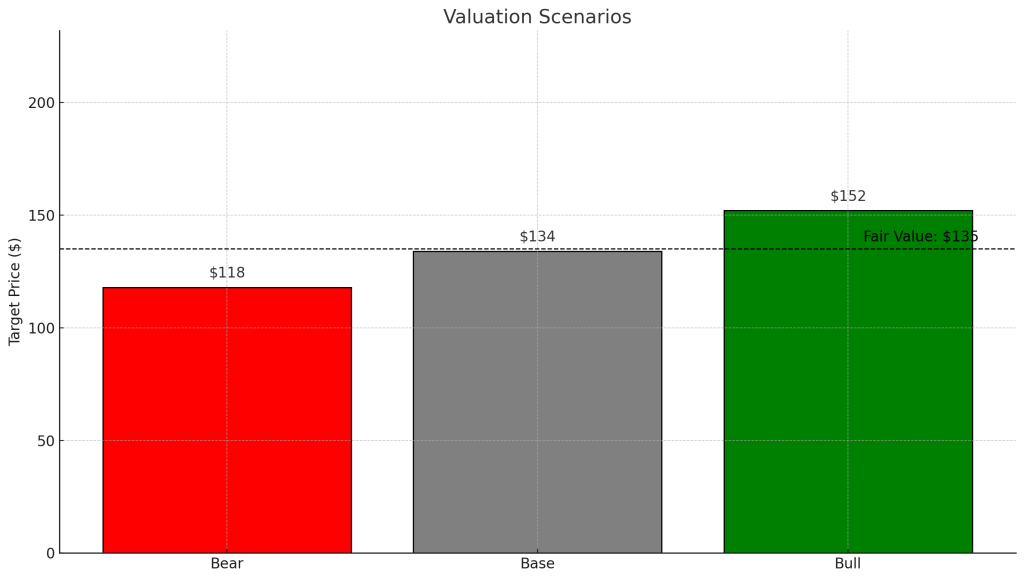
Bar chart showing Micron’s Q3 FY2025 valuation scenarios. Bear case target is $100 (red), base case is $135 (gray), bull case is $160 (green), and current stock price is $127 (black). A dotted blue line marks the calculated fair value at $136. The chart illustrates relative upside potential under different earnings scenarios.

Peer Context: How Does Micron Stack Up?

Micron’s 39% gross margin now rivals Samsung’s memory division but still trails SK Hynix’s HBM-focused business, which has hit margins north of 45%. However, Micron’s consistent EPS acceleration — paired with a cleaner balance sheet and U.S. production capacity — could justify a premium multiple in future quarters.

Bar chart comparing gross margins of major memory players for Q3 FY2025. Micron has a 39% gross margin, SK Hynix leads with 45%, and Samsung’s memory division reports 40%. The chart highlights Micron’s competitive positioning, slightly behind its Korean peers in profitability.

What to Watch Next Quarter

  1. HBM4 Ramp-Up: Will Micron maintain pricing power as next-gen chips hit production?
  2. CapEx Discipline: Is investment tapering enough to keep FCF positive?
  3. AI Demand Stickiness: Does server spending hold up into year-end?

Verdict: Hold to Accumulate

Micron is no longer just a cyclical memory stock — it’s emerging as a core infrastructure provider for the AI era. At today’s price around $127, the stock offers a balanced risk-reward profile with clear near-term momentum and longer-term optionality. For tech-savvy growth investors, this is a name to hold and continue accumulating on dips — not chase blindly, but don’t look away either.


Call to Action

If you’re tracking AI infrastructure plays and want insights backed only by the official data — not clickbait — follow SWOTstock or subscribe for the next update.


Disclaimer

This post is for informational purposes only. All analysis is based solely on Micron’s official Q3 FY2025 financial report and earnings call transcript. No third-party data or analyst commentary was used.


Leave a comment


Why Oracle Soared While Adobe Slipped: What Diverging Stock Reactions Reveal About Investor Confidence in AI

Oracle and Adobe both beat earnings expectations, but their stocks moved in opposite directions. Discover why Oracle soared while Adobe slipped—and what it reveals about investor confidence in AI execution vs. hype.

Two enterprise tech giants—Oracle and Adobe—both reported strong quarterly results this past week. Each beat Wall Street expectations and highlighted their advancements in artificial intelligence. But the stock market reaction couldn’t have been more different:

  • Oracle stock surged +13%
  • Adobe stock declined –7%

At SWOTstock, we examined the earnings reports, management commentary, and investor sentiment. What we found illustrates a growing gap in how the market values AI strategy: it’s not about who talks the loudest—it’s about who delivers results.

Visual comparison chart of Oracle and Adobe's Q2 FY2025 earnings and AI strategies. The chart contrasts both companies across key metrics: revenue growth (+11% each), AI strategy (Oracle monetizing, Adobe uncertain), cloud momentum (Oracle’s OCI +52%), revenue visibility ($138B RPO for Oracle), and stock reaction (+13% vs. –7%). Highlights Oracle's strong execution versus Adobe’s investor skepticism.

Oracle: AI Execution Drives Confidence and Capital

Oracle’s Q4 FY2025 earnings confirmed the company’s transformation from legacy enterprise vendor to cloud-first AI infrastructure provider. Revenue climbed 11% YoY, while Oracle Cloud Infrastructure (OCI) accelerated an impressive 52%.

What truly stood out was Oracle’s $138 billion in remaining performance obligations (RPO), offering investors forward-looking visibility. With high-profile partnerships (NVIDIA, Cohere) and GenAI workloads already in production, Oracle isn’t pitching an AI future—it’s reporting on AI present.

SWOTstock Takeaway
Oracle’s strength lies in its ability to turn AI demand into revenue now—not years from now.

Key Strengths:

  • Cloud Infrastructure (OCI) grew +52% YoY
  • AI partnerships with NVIDIA and Cohere are already monetizing
  • $138B RPO provides long-term visibility and stability

Risks to Watch:

  • Continued competition from AWS, Microsoft, and Google
  • Legacy on-premise business still weighs on blended growth
Oracle SWOT analysis chart with four quadrants:

    Strengths: Strong OCI momentum, deep enterprise relationships

    Weaknesses: Slow AI service adoption, legacy business drag

    Opportunities: Expanding AI workload footprint, growing infrastructure demand

    Threats: Cloud competition from hyperscalers, changing enterprise IT spending trends

Adobe: Solid Results, But Investors Want AI ROI

Adobe’s Q2 FY2025 results were strong on the surface: 11% revenue growth, earnings beat, and raised guidance. Yet investors responded with skepticism, sending the stock down 7%.

The issue? Despite promoting new AI tools like Firefly, GenStudio, and Acrobat AI, Adobe has yet to show how these innovations will contribute meaningful revenue in the short term. Investor patience is wearing thin.

Meanwhile, competition is heating up. Canva is gaining ground in design, while OpenAI and Google are introducing productivity tools that threaten Adobe’s document business. In this environment, a premium pricing model without clear AI-driven ARR growth becomes difficult to defend.

SWOTstock Takeaway
Adobe’s innovation story is still credible, but without visible monetization, the stock is vulnerable.

Key Strengths:

  • Industry-leading suite across Creative, Document, and Experience Cloud
  • Rapid rollout of AI-powered features

Risks to Watch:

  • No clear monetization path from AI features
  • Growing threats from Canva, OpenAI, and Google
  • Pressure on margins and customer retention
SWOT analysis chart of Adobe featuring the company logo at the center. The four quadrants highlight:

    Strengths: Leading creative software suite, growing AI capabilities

    Weaknesses: High valuation concerns, reliance on Creative Cloud

    Opportunities: Expansion into diverse AI applications, enterprise software potential

    Threats: Economic uncertainty, increasing competition in creative software market

Why the Divergence?

Despite similar top-line growth, the market saw Oracle and Adobe very differently:

Table comparing Oracle and Adobe’s Q2 FY2025 earnings and market reactions. Oracle delivered +11% revenue growth, +52% OCI growth, and a $138B RPO backlog, leading to a +13% stock surge. Adobe also posted +11% revenue growth but lacked visible AI monetization and competitive defense, resulting in a –7% stock drop.

Oracle showed the market what execution looks like. Adobe reminded investors that potential alone is no longer enough.


What to Watch in the Next 6–12 Months

🔮 Oracle Outlook:
Expect continued strength if cloud growth persists and GenAI partnerships scale. RPO offers downside protection in case of macro softness.

⚠️ Adobe Outlook:
Needs to prove that AI tools are driving ARR and enterprise wins. Without that, competitive pressures may accelerate valuation compression.


Final Thoughts: AI Is Entering the Show-Me Phase

This earnings season proves that we’re past the AI hype cycle. The market is now demanding proof—measurable, monetizable traction.

At SWOTstock, we’ll keep tracking this shift as it plays out in earnings calls, product roadmaps, and valuation resets.

👉 Follow us for AI-enhanced stock insights built for growth-minded and DIY value investors.


⚠️ Disclaimer

This analysis is based on publicly available company financials, earnings call commentary, and official press releases as of June 2025. It is intended for informational purposes only and does not constitute investment advice. Always perform your own due diligence.


Leave a comment