Autodesk Q1 2026 Earnings: AI Tools Drive Growth—but Is the Upside Already Priced In?

Autodesk (ADSK) beats Q1 FY2026 estimates and raises guidance, but is the stock already priced for perfection? Dive into our AI-focused SWOT analysis, valuation breakdown, and investor verdict.

TL;DR – Solid Beat, Upgraded Guidance, But Market Unmoved

Autodesk (NASDAQ: ADSK) beat expectations in Q1 with 15% revenue growth, expanding margins, and strong free cash flow. Management raised full-year guidance and highlighted its AI platform roadmap. Still, the stock stayed flat—suggesting the optimism may be fully priced in.


Financial Overview – Growth That Converts to Cash

Autodesk reported:

  • Revenue: $1.63B (+15% YoY)
  • EPS (Non-GAAP): $2.29
  • Operating Margin: 37% (+300bps YoY)
  • Free Cash Flow: $556M (+14%)
  • Billings: $1.43B (+29%)
  • FY2026 guidance raised for revenue and EPS

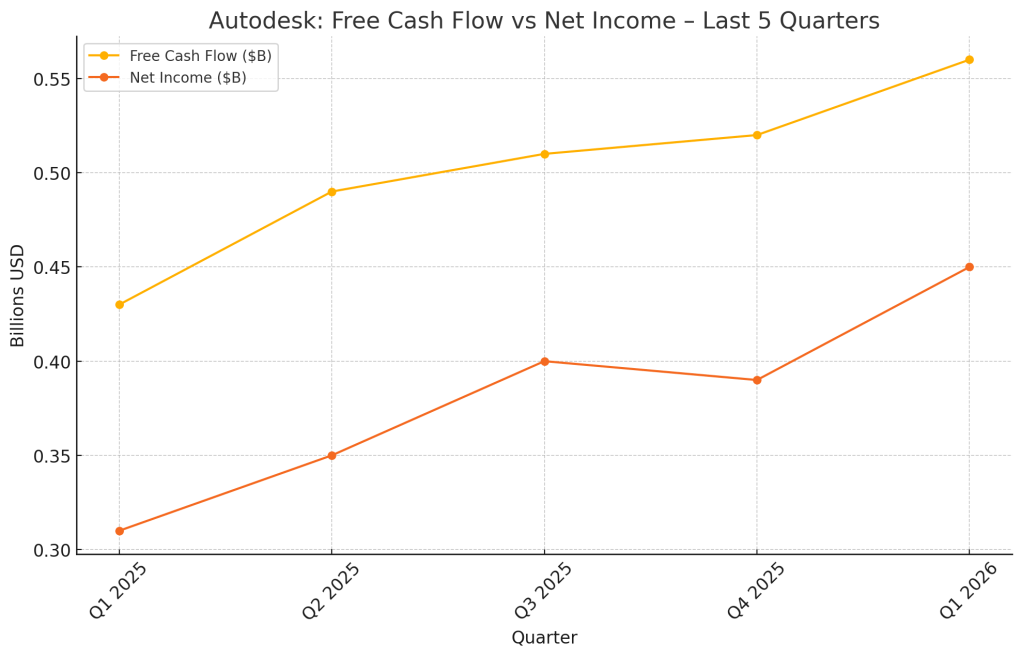
What sets Autodesk apart isn’t just strong revenue—it’s the ability to consistently convert earnings into cash flow.

Line chart showing Autodesk’s free cash flow and net income over the last five quarters, highlighting consistent growth through Q1 2026.

Where the Growth Is Coming From

Revenue isn’t growing evenly across all business lines. Autodesk’s AEC (architecture, engineering, and construction) segment remains dominant, but Manufacturing and “Others” are catching up.

Bar chart comparing Autodesk’s revenue by segment—AEC, Manufacturing, and Others—between Q1 2025 and Q1 2026.

Also critical is the mix of recurring revenue. Subscription ARR is expanding steadily, which supports long-term valuation multiples.

Line chart showing Autodesk’s total revenue versus quarterly subscription ARR from Q1 2025 to Q1 2026, reflecting recurring revenue growth.

Management’s Outlook – Confidence Backed by Upward Revisions

Autodesk has shown a pattern of raising guidance, reinforcing investor confidence in leadership and execution.

Bar chart illustrating Autodesk’s EPS guidance revisions, showing increases from original to final guidance in FY2025 and FY2026.

SWOT Breakdown – What’s Working, What’s Not, and Where We Go Next

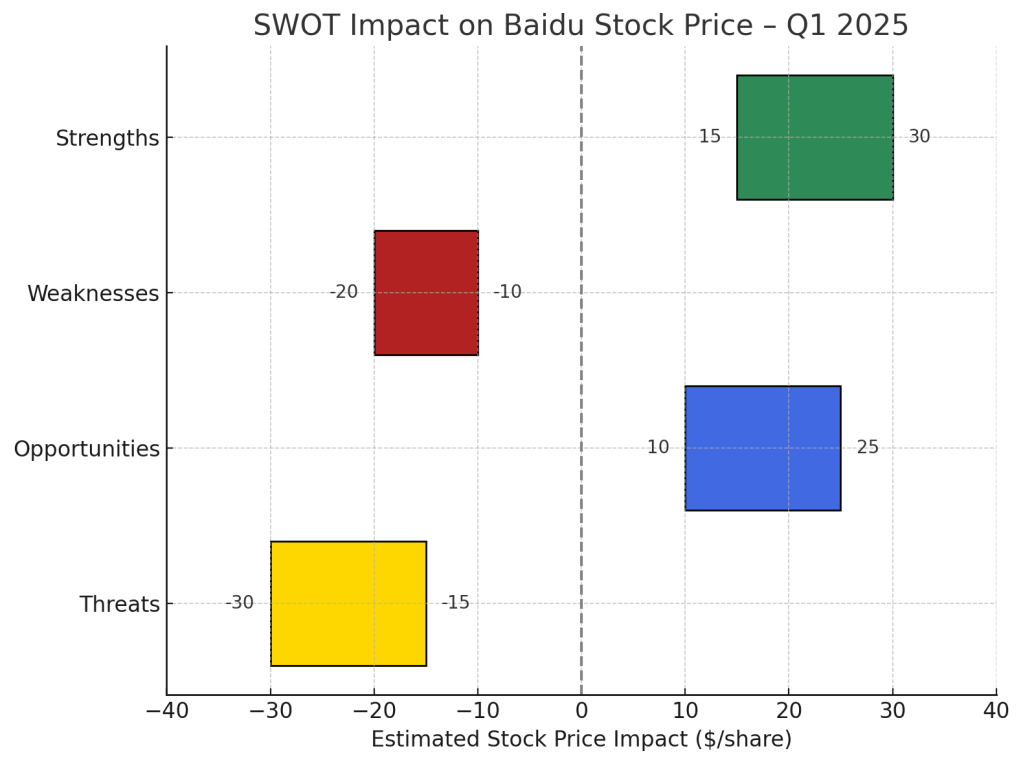
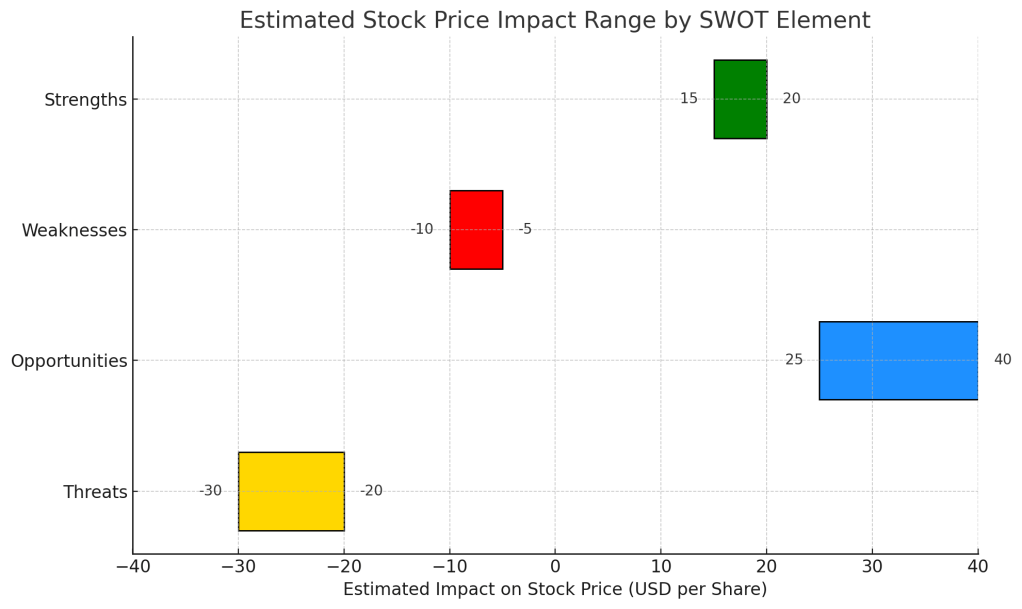
Let’s break it down using SWOT—strengths, weaknesses, opportunities, and threats—with estimated stock price impact for each:

Strengths

  • Revenue and FCF beat expectations
  • AI rollout begins across Revit and Fusion
  • Subscription model fuels predictable growth

Price Impact: +$15 to +$20


Weaknesses

  • Flat stock reaction post-earnings suggests limited short-term upside
  • High R&D spend during platform transition could compress near-term margins

Price Impact: –$5 to –$10


Opportunities

  • Generative design and predictive modeling features gain traction
  • Construction Ops platform and APAC expansion could drive new growth
  • Increased ARR could unlock multiple expansion

Price Impact: +$25 to +$40


Threats

  • Geopolitical and macro headwinds
  • Execution risk with AI and Cloud scale
  • Valuation already rich (~30.7x forward earnings)

Price Impact: –$20 to –$30

SWOT Summary Table

Type Key Points Price Impact
Strengths Revenue & margin beat, AI rollout started +$15 to +$20
Weaknesses Flat stock, platform costs –$5 to –$10
Opportunities Generative design AI, platform growth, APAC expansion +$25 to +$40
Threats Macro risk, AI execution gaps, valuation pressure –$20 to –$30
Horizontal bar chart showing Autodesk’s estimated stock price impact by SWOT element with both endpoints labeled.

Valuation Scenarios – Let’s Do the Math

Despite the strong report, Autodesk’s closing price after earning released ($295.35 as of May 23, 2025) implies a ~30.7x forward P/E. Here’s how that compares to valuation scenarios based on official EPS guidance and fair multiples:

Base Case – Fair Value: $132

  • EPS = $9.62 × P/E 13.7 → $132
  • Reflects steady execution and moderate optimism

Bull Case – Fair Value: $160

  • EPS = $9.73 × P/E 16.5 → $160
  • Assumes strong AI traction and margin expansion

Bear Case – Fair Value: $100

  • EPS = $9.50 × P/E 10.5 → $100
  • Macro pressure + execution delays = multiple compression

Weighted Average Estimate: $132.5

(132×0.6)+(160×0.25)+(100×0.15)=132.5

Bar chart showing Autodesk’s valuation scenarios with weighted average, compared to current stock price.

So Why Is the Market Paying $295?

That’s nearly double our base case. Investors are pricing in:

  • Premium for platform dominance and design ecosystem
  • Long-term AI monetization potential
  • Confidence in 3–5 year growth, not just FY2026

Let’s check historical valuation to see if this premium is new.

Dual-axis chart showing Autodesk’s stock price and trailing P/E ratio over the last five years.

Verdict – Fully Valued. Wait for Dip.

Autodesk’s vision is impressive. The stock is too.
But at current prices, the upside may already be realized—at least in the short term. Long-term investors may want to hold. Opportunists should consider waiting for a pullback below $250 to improve margin of safety.


Call to Action

Want no-hype, investor-friendly breakdowns like this?
Subscribe to SWOTstock to stay ahead of the curve—no fluff, just fundamentals.


Disclaimer

This post is based solely on Autodesk’s official financial report and earnings call transcript. It does not constitute investment advice. Please do your own research.


Leave a comment


Walmart Q1 2025: E-Commerce Turns a Profit—But Is That Enough for the Stock to Break Out?

Walmart reported strong Q1 FY2026 results, with sales rising to $165.61 billion and e-commerce profitability achieved globally. Despite these positives, stock prices remained flat due to inflation, pricing pressures, and a lack of EPS guidance. While Walmart presents growth opportunities, macroeconomic risks traditionally temper investor enthusiasm.

Quick Take: Steady Growth, But Macro Risks Keep a Lid on the Rally

Walmart (NYSE: WMT) delivered a strong Q1 with rising sales, expanding operating income, and—most importantly—e-commerce profitability. Yet the stock barely moved. Why? Inflation, pricing pressure, and the decision to withhold EPS guidance signal near-term caution. For long-term, low-risk growth seekers, Walmart still looks like a solid bet, but now’s the time to watch execution closely.


Quarter Recap: A Landmark Quarter, But Tariff Warnings Weigh Heavily

Walmart’s Q1 FY2026 (calendar Q1 2025) showed revenue of $165.61 billion (+2.5% YoY), with operating income up 4.3%. U.S. comparable sales rose 4.5%, driven by strong performance in food and pharmacy. A standout highlight: e-commerce operations became profitable globally—a signal that Walmart’s long-term tech investments are beginning to pay off.

Despite this, the stock dipped –0.5% during regular trading and was down 4% at open, after an initial premarket rise. The reason? CEO Doug McMillon acknowledged that Walmart would raise prices in response to persistent tariffs. And critically, the company withheld EPS guidance, citing economic uncertainty.

Why this quarter matters: Walmart just hit a key profitability milestone in digital—but cost pressures and visibility concerns are limiting investor enthusiasm.


Walmart Q1 2025 – Key Financial Highlights

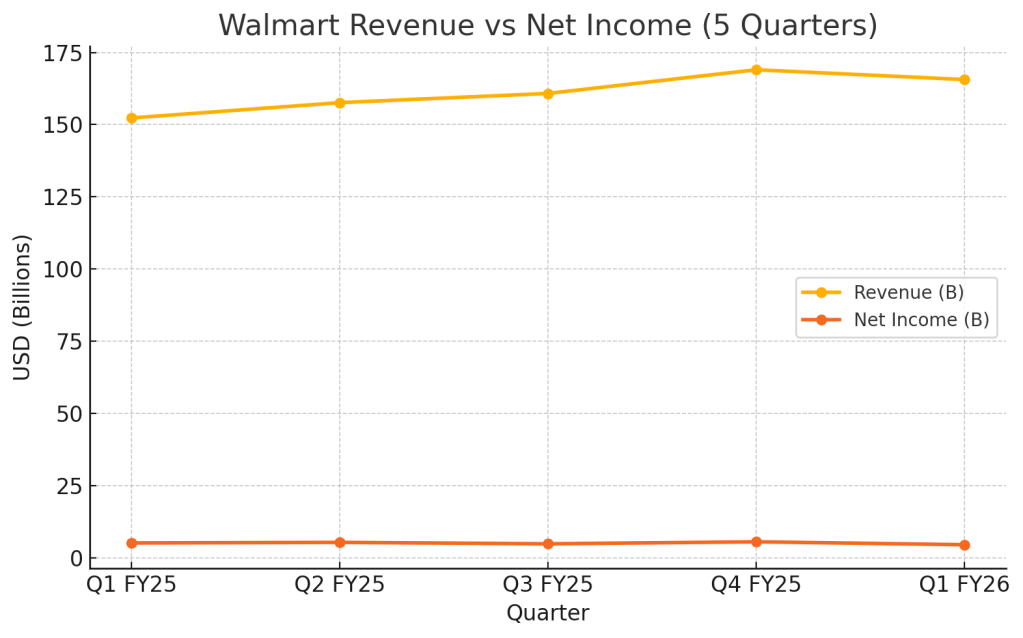
  • Revenue: $165.61B (+2.5% YoY)
  • Net Income: $4.49B (down from $5.10B YoY)
  • EPS: $0.61 (beat by $0.03)
  • U.S. Comp Sales: +4.5%
  • Global E-commerce Sales: +22% YoY
  • E-commerce Profitability: First time achieved globally
  • Operating Income: +4.3%
  • FY Guidance: Reaffirmed 3–4% sales growth; EPS guidance withheld
Line chart showing Walmart's revenue and net income trend over five quarters, highlighting solid sales with recent profit compression.

Walmart vs. Amazon vs. Target: Who’s Winning the Retail Transformation?

MetricWalmartAmazonTarget
E-commerce ProfitabilityAchieved (Q1 2025)Long-establishedStill lagging
In-store Sales Growth+4.5% U.S. compsMinimal (no store footprint)Flat to slightly negative
Ad Revenue MonetizationExpanding (Walmart Connect)Robust (Amazon Ads)Early stage
Inventory StrategyAI + automation scalingLogistics leaderStruggling with excess
Guidance ToneCautious, no EPS givenConfidentDefensive, cost-cutting

Takeaway: Walmart is the only large-format retailer with profitable e-commerce and store traffic momentum. It lags Amazon in tech monetization but is clearly outpacing Target in operational agility.


SWOT Breakdown: Walmart’s Digital Wins Meet Margin Headwinds

Let’s break it down using a simple SWOT framework—what’s going well, what’s not, where the upside lies, and what risks could derail the story.

Strengths

Walmart is scaling e-commerce profitably while growing in-store comps. Fulfillment efficiency and automation are boosting operating income.

Stock Price Impact Estimate:
Could support a +$3 to +$5 upside if this continues.

Weaknesses

Margins remain pressured. Net income declined, and the decision not to issue EPS guidance raises questions about confidence in short-term forecasting.

Stock Price Impact Estimate:
Could cap the stock by –$1 to –$3 per share.

Opportunities

Automation, Walmart+, advertising, and health services offer high-margin growth channels. AI integration in logistics and demand planning could unlock additional EPS upside.

Stock Price Impact Estimate:
If scaled well, could add +$4 to +$6 to valuation.

Threats

Tariffs, inflation, and pricing action could impact demand—especially in general merchandise. Management’s caution suggests macro risk isn’t fully priced in.

Stock Price Impact Estimate:
Worst-case downside of –$4 to –$6.

Horizontal bar chart estimating stock price impact ranges for Walmart’s Q1 2025 SWOT elements: strengths, weaknesses, opportunities, and threats.

SWOT Table Summary

CategoryKey TakeawaysEst. Stock Impact
StrengthsSolid comp growth, e-commerce profitability+$3 to +$5
WeaknessesMargin pressure, EPS visibility unclear–$1 to –$3
OpportunitiesMonetization of tech, AI, memberships, ad platform+$4 to +$6
ThreatsTariffs, inflation, pricing backlash–$4 to –$6
Four-quadrant SWOT chart summarizing Walmart’s Q1 2025 strengths, weaknesses, opportunities, and threats with the Walmart logo in the center.

Valuation Scenarios: How Walmart Stock Could Play Out from Here

Let’s revisit Walmart’s valuation in light of its solid operational execution, profitability in e-commerce, and the macro risks it faces. With the current stock price at $96.35, here’s how the stock could move in three realistic scenarios.


Base Case (Most Likely – 50%)

  • Summary: Walmart maintains low-single-digit revenue growth, keeps e-commerce profitable, and stabilizes margins with the help of automation and better inventory management. However, wage inflation and tariffs continue to pressure near-term earnings. EPS growth remains modest, and valuation multiples stay flat.
  • Fair Value Estimate: $100
  • Probability: 50%

Bull Case (Optimistic – 30%)

  • Summary: Walmart’s automation and AI-driven efficiencies begin to show stronger results, driving margin expansion. Advertising and subscription revenue accelerate, and general merchandise demand rebounds despite pricing headwinds. The company regains multiple expansion as investors price in stronger long-term profitability.
  • Fair Value Estimate: $110
  • Probability: 30%

Bear Case (Downside – 20%)

  • Summary: Consumer demand weakens as inflation and tariff-related pricing continue to rise. Walmart is forced to absorb more costs to maintain competitiveness, leading to margin compression. EPS flattens or declines. Valuation contracts slightly due to uncertainty around macro execution.
  • Fair Value Estimate: $85
  • Probability: 20%
Bar chart showing Walmart's valuation scenarios—bear, base, and bull—based on Q1 2025 performance and forward outlook.

Weighted Average Fair Value Calculation

(64×0.5)+(72×0.3)+(52×0.2)=$64.00


Valuation Verdict

With the current price at $96.35 (as of May 15, 2025), Walmart appears slightly undervalued based on its fundamental performance and risk-balanced outlook. For long-term, growth-conscious investors seeking resilience and scalable upside, Walmart may offer a reasonable entry point—especially if the company can maintain its digital momentum while defending margins.


Call to Action

Want focused stock breakdowns like this for every major earnings report?
Subscribe now for no-jargon, data-backed posts you can trust.


Disclaimer

This analysis is based solely on Walmart’s official Q1 FY2026 financial report and earnings call transcript. It is not investment advice. Please do your own research before investing.


Leave a comment

Disney Q2 2025 Earnings: Streaming Profits, Theme Park Ambitions—But Is the Stock Already Running Ahead?

Disney Q2 2025 earnings blog post analyzing revenue growth, streaming profitability, and theme park expansion, featuring a full SWOT analysis, stock price impact estimates, and valuation scenarios to guide retail investors.

Quarter Recap: Disney Delivers a Comeback Quarter

Disney’s (NYSE: DIS) Q2 2025 numbers show it’s more than just nostalgic IP. Revenue came in at $23.6 billion, up 7% from last year. Adjusted EPS hit $1.45—up 20%. Net income surged to $3.3 billion, a massive rebound from the prior year.

Investors liked what they saw. Disney stock jumped nearly 10% after the report dropped, reflecting growing confidence that the company’s turnaround is real.

Two major wins stood out:

  • Streaming operations posted positive income.
  • The Experiences segment (parks, cruises) delivered another strong quarter.
Line chart showing Disney’s revenue and net income over the past five quarters, highlighting a sharp increase in net income during Q2 2025.

Segment Breakdown: Who’s Pulling the Weight

Streaming (Disney+, Hulu, ESPN+)

  • Turned a profit this quarter
  • Subscriber growth continued, though at a steadier pace
  • Bundling and cost control drove the improvement

Experiences (Parks & Cruises)

  • Revenue: $8.9 billion
  • Strong demand in both U.S. and international parks
  • Cruise occupancy and ticket yields improved

Linear Networks (TV/Cable)

  • Continues to shrink
  • Revenue and ad sales declined

Strategic Moves: Where the Magic’s Going

Disney’s not sitting still. Management is investing heavily—planning $60 billion over 10 years to expand its Experiences segment. That includes international projects like a new theme park in Abu Dhabi, upgrades to existing resorts, and cruise capacity expansion.

Streaming is also evolving. A standalone ESPN platform is on the way—positioning Disney to reach sports fans directly without traditional cable. Combined with cost discipline and cross-platform synergy, this is Disney trying to play offense again.


SWOT Analysis: What Could Move the Stock Next

Strengths: Streaming Turnaround and Park Momentum

Disney is now running a profitable streaming business while theme parks continue to print cash. Add global brand power and unmatched IP—this is a combo few can replicate.

Stock Impact Estimate: + $6 to $10


Weaknesses: Old Media Drag and Content Costs

Linear TV’s decline is structural. Meanwhile, content creation isn’t cheap—especially with high production expectations for Marvel, Star Wars, and beyond. That’s still weighing on margins.

Stock Impact Estimate: – $3 to $6


Opportunities: Global Expansion, ESPN+, IP Leverage

Disney is one of the few entertainment giants that can build both digital and physical experiences. ESPN’s direct-to-consumer rollout and international park projects are growth levers that haven’t fully priced in yet.

Stock Impact Estimate: + $5 to $9


Threats: Macro, Competition, and Saturation

High inflation, consumer fatigue, and stiff competition from Netflix, Amazon, and Apple TV+ are risks. Streaming growth isn’t unlimited, and pricing power may be tested.

Stock Impact Estimate: – $4 to $8


SWOT Summary

Strengths

  • Streaming profitability, parks growth, brand power
  • Impact: +$6 to +$10

Weaknesses

  • Content cost, TV decline, capex pressure
  • Impact: –$3 to –$6

Opportunities

  • Park expansion, ESPN DTC, franchise bundling
  • Impact: +$5 to +$9

Threats

  • Inflation, competition, platform fatigue
  • Impact: –$4 to –$8

Valuation Scenarios: Is the Stock Still Undervalued?

ScenarioTarget PriceAssumptionsProbability
Bull$128Streaming accelerates, parks outperform30%
Base$115Solid execution, steady growth50%
Bear$95Macro slows demand, investments lag20%
Horizontal bar chart illustrating estimated stock price impact by SWOT category for Disney Q2 2025, with strengths and opportunities showing positive influence and weaknesses and threats showing negative impact.

Weighted Fair Value Estimate: $114.90
Current Price: ~$108
(Stock popped ~10% post-earnings but still under fair value)


How Disney Stacks Up vs Rivals

  • Netflix: Still bigger in subscribers, but less diversified—no theme parks or physical cash engines
  • Amazon & Apple: Use streaming to support other businesses. Disney is the content and experience business
  • Comcast: More reliant on cable; Disney’s pivot to DTC looks stronger

Final Verdict: Is Disney Stock Still a Buy?

This was a strong quarter. Disney showed it can run a leaner, smarter business while building for the future. Streaming works. Parks are growing. And IP monetization across content, sports, and experiences is just getting started.

The stock is no longer a bargain—but it’s also not overpriced. At ~$108, it’s trading slightly below our fair value estimate. For investors who want long-term exposure to a globally integrated content company, Disney looks like a smart hold with upside.


What to Watch Next

  • ESPN Standalone Launch: Could attract new DTC revenue
  • Subscriber Churn: Especially outside U.S.
  • Next Park Announcement or Capex Update
  • Profitability Trends: Are margins expanding or flatlining?

Call to Action

Like this breakdown?
Follow @SWOTstock on Instagram for real earnings analysis—no hype, no jargon.
And subscribe to stay ahead of the next big earnings move.


Disclaimer

This post is based exclusively on Disney’s official Q2 2025 earnings report and conference call. It does not use analyst projections or third-party commentary. Please do your own research before making investment decisions.