BioNTech Oncology Pivot: What the BMS Deal Tells Us About the Next Growth Phase (a SWOT update)

BioNTech’s $11B oncology deal with Bristol Myers marks a major pivot from COVID vaccines to cancer therapeutics. Explore SWOT analysis, valuation scenarios, and what investors should watch next.

TL;DR – BioNTech’s Story Is No Longer Just About COVID

BioNTech (NASDAQ: BNTX) newly announced global partnership with Bristol Myers Squibb marks a major milestone in its shift from pandemic-era vaccine leader to a diversified oncology innovator. The multi-billion-dollar agreement, centered around the bispecific antibody BNT327, gives BioNTech both near-term cash flow and long-term upside potential in solid tumor treatments. While risk remains around trial outcomes and execution, this partnership may help reset the company’s valuation narrative and attract long-term biotech investors looking beyond COVID normalization.


🧬Quarter Recap – Revenue Resilience and Oncology Focus Take Center Stage

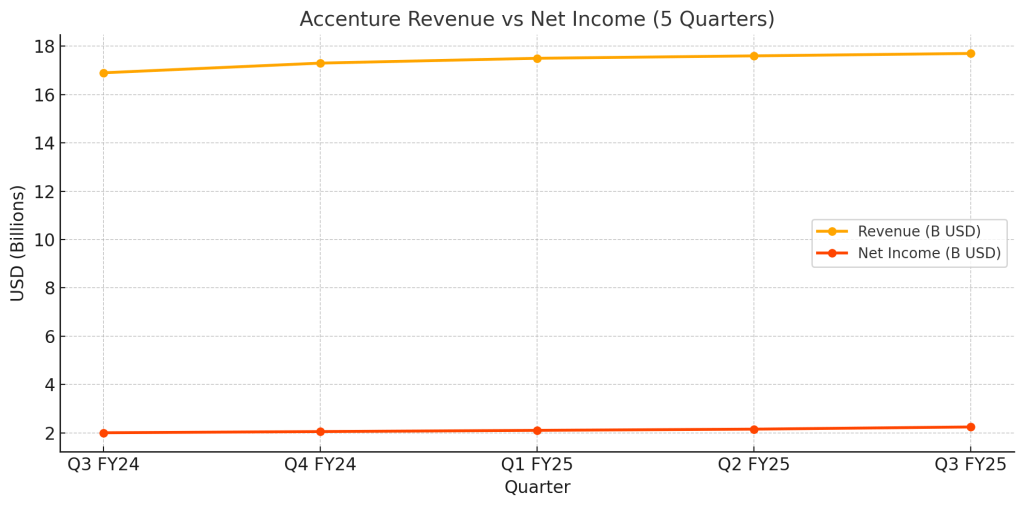
Line chart showing BioNTech’s quarterly revenue and net income trend from Q2 2024 to Q2 2025, highlighting consistent revenue above $1B and narrowing profit.

BioNTech’s second quarter showcased steady financial execution, supported by ongoing COVID-19 vaccine revenue that continues to fund its aggressive R&D strategy. The company reported revenue of approximately $1.2 billion, reflecting sustained contributions from Comirnaty while vaccine demand tapers. However, the real story this quarter was not the top line—it was the strategic clarity around BioNTech’s future.

With research and development expenses rising 15% quarter-over-quarter, the company is clearly leaning into its oncology ambitions. Management emphasized its commitment to advancing next-generation immunotherapies, most notably BNT327, a bispecific antibody targeting PD-L1 and VEGF-A. The asset, acquired via the Biotheus transaction in 2024, is now in Phase 3 trials for multiple solid tumors including ES-SCLC and NSCLC. A Phase 3 study in triple-negative breast cancer is also expected by year-end, setting up key catalysts for 2026.


🌟 Key Developments – The Strategic Weight of the BMS Deal

The standout event this quarter was the announcement of a global partnership with Bristol Myers Squibb to co-develop and co-commercialize BNT327. The agreement provides BioNTech with a $1.5 billion upfront payment, additional guaranteed payments over the next several years, and significant potential milestone payouts. Importantly, the economics are structured as a 50:50 global profit-sharing arrangement, signaling Bristol’s confidence in the asset’s commercial viability.

For BioNTech, this collaboration serves multiple purposes. First, it de-risks the development of a key oncology pipeline candidate by sharing costs and leveraging BMS’s global reach and regulatory infrastructure. Second, it reinforces investor confidence that BioNTech’s pipeline can attract marquee partners—not just in mRNA but also in antibody-based modalities. Finally, it offers a non-dilutive capital infusion that enhances balance sheet flexibility without issuing equity or adding debt.


🧠 SWOT Analysis – Where BioNTech Stands After the BMS Deal

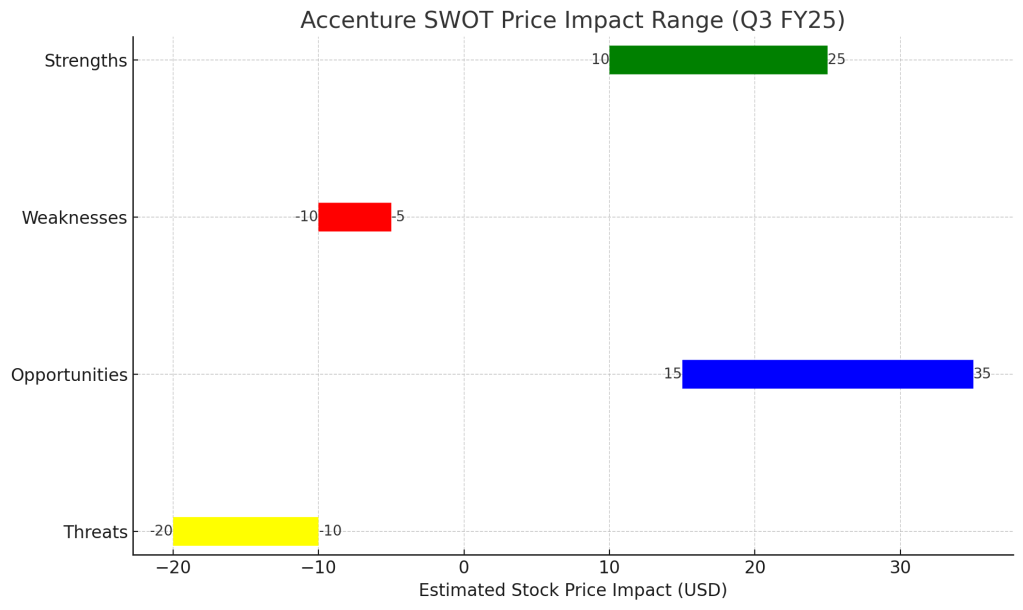
BioNTech SWOT analysis chart showing estimated stock price impact ranges by category in June 2025. Strengths in green, weaknesses in red, opportunities in blue, and threats in yellow.

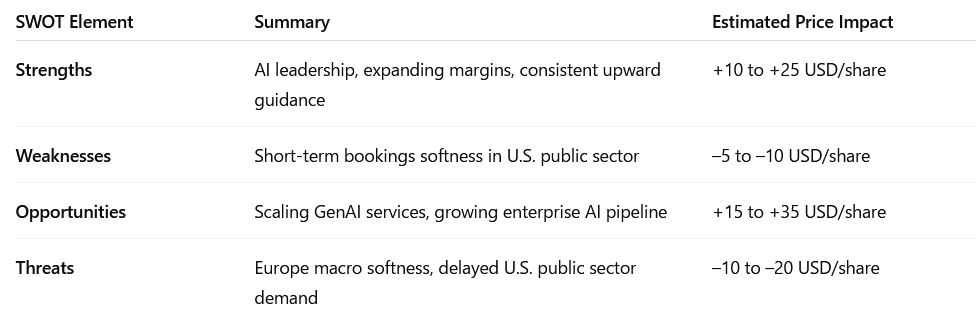
✅ Strengths (+10 to +25 USD/share impact)

BioNTech’s landmark partnership with Bristol Myers Squibb is a major credibility boost, both clinically and financially. The $1.5 billion upfront payment plus future milestone opportunities significantly de-risk the development of BNT327. More importantly, the 50:50 global profit-sharing structure means BioNTech now has a world-class commercial partner helping carry the execution load. For investors, this translates into greater confidence and visibility—potentially adding $10 to $25 per share in upside as development progresses and market confidence grows.

⚠️ Weaknesses (–5 to –10 USD/share impact)

Despite the strong partnership, BioNTech remains concentrated around a few key assets, particularly BNT327. This pipeline dependency raises risk if any major candidate stumbles. Additionally, while the profit-sharing model is strategic, it also caps BioNTech’s solo upside potential. The company also lacks a fully developed commercial infrastructure, especially in oncology, which could limit its leverage even with good data. These factors could weigh on valuation by $5 to $10 per share, especially in periods of uncertainty.

🚀 Opportunities (+15 to +35 USD/share impact)

If BNT327 delivers in Phase 3 trials, BioNTech could establish itself as a leader in solid tumor therapeutics. The indications in development—lung cancers and triple-negative breast cancer—represent multi-billion-dollar global markets. Strong data could not only drive rapid adoption but also open doors for more licensing deals or companion therapies. With expanding capabilities across mRNA, ADCs, and bispecifics, the company’s platform is increasingly credible. All told, this opportunity could lift the stock by $15 to $35 per share over the next 12–24 months.

🧨 Threats (–10 to –20 USD/share impact)

Competition in oncology is fierce. Several major pharma companies are investing heavily in bispecific antibodies and related immunotherapies. Clinical or regulatory setbacks—whether from safety signals, suboptimal efficacy, or trial delays—could hurt BioNTech’s momentum. Moreover, pricing pressure or shifting standards of care could impact long-term commercialization potential. If investor sentiment turns negative on the BNT327 story, it could drag the stock down by $10 to $20 per share in a bear-case scenario.


📊 Valuation Scenarios – A New Lens Post-Partnership

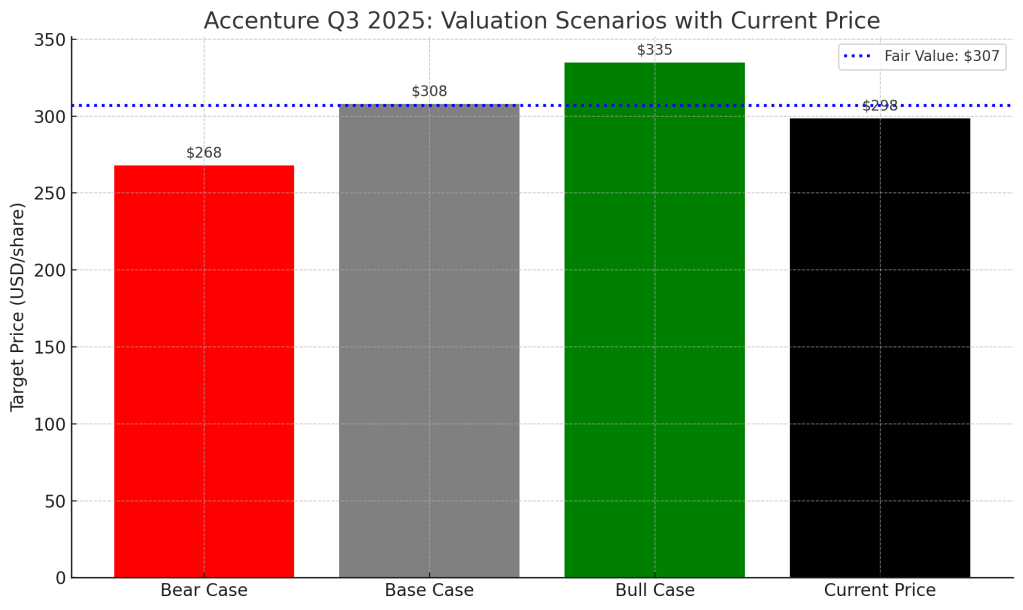
Under our updated outlook following the Bristol Myers Squibb partnership, BioNTech’s valuation potential can be framed across three core scenarios—bull, base, and bear—each reflecting different assumptions around BNT327’s success, pipeline execution, and competitive dynamics.

Bar chart of BioNTech valuation scenarios in June 2025 with target prices for bull, base, and bear cases, a black bar for the current stock price, and a blue dotted line for estimated fair value at $198.

💰 What’s BioNTech Worth After the BMS Deal?

To value BioNTech post-Bristol Myers Squibb partnership, we consider three realistic outcomes for its oncology pipeline—each reflecting different degrees of clinical success and commercial impact.

🟢 Bull Case – $300/share (25% probability)

In the most optimistic scenario, BNT327 shows strong efficacy in late-stage trials and secures fast-track regulatory approval across multiple cancer types. Broad clinical adoption follows, boosting earnings to around $10 per share. Applying a 30x P/E ratio, the stock could be worth $300 per share. While aggressive, this scenario reflects the kind of breakout success biotech investors target—and we assign it a 25% probability.

⚪ Base Case – $180/share (60% probability)

The base case assumes steady but not spectacular execution. BNT327 gets approved and launches successfully, but uptake is gradual. Meanwhile, BioNTech’s other pipeline assets add modest support to revenue. Under this model, we forecast earnings of $7.50 and a valuation multiple of 24x, pointing to a target price of $180. Given current fundamentals and the BMS partnership, we assign this a 60% probability.

🔴 Bear Case – $100/share (15% probability)

In a downside scenario, BNT327 underwhelms in clinical trials or faces regulatory delays. Competitive pressure from other antibody platforms increases, and investor sentiment cools. If earnings slip to $5.00 and the stock trades down to a 20x multiple, we could see a revaluation to $100 per share. While less likely, we assign this outcome a 15% probability.

Table showing BioNTech's valuation scenarios as of June 2025, including bull, base, and bear cases with estimated EPS, P/E multiples, target prices, and assigned probabilities for each scenario.

📊 Fair Value Estimate: $198

Weighted across all three scenarios, we estimate BioNTech’s fair value at $198 per share—well above its current trading level of ~$113 (as of June 2025). That implies ~75% upside if execution continues and trial results are even moderately positive.

📌 Probability-Weighted Fair Value:

(0.25×300)+(0.60×180)+(0.15×100)=198.00

Current Price (as of June 2, 2025): ~$113
Implied Upside: ~75%


✅ Verdict – This Is More Than a Deal; It’s a Strategic Signal

The Bristol Myers Squibb deal is more than just financial. It reflects institutional confidence in BioNTech’s shift toward long-term oncology growth. For investors, this partnership offers near-term visibility and long-term optionality. BNT327’s clinical readouts over the next 12–18 months will be pivotal, but the alignment with BMS significantly enhances BioNTech’s execution potential and credibility with both regulators and the market.

While the post-COVID revenue decline is no longer new news, BioNTech’s ability to refill its growth pipeline—and do so through strategic, non-dilutive partnerships—could make it one of the better-positioned mid-cap biotech stories heading into 2026.


📣 Call to Action

If you’re looking for exposure to immuno-oncology without the early-stage binary risk of preclinical names, BioNTech offers a compelling mid-cycle entry point. Follow trial updates closely, especially from the BNT327 Phase 3 programs, and watch for signs of further pipeline monetization or additional deals that validate the broader platform.


⚠️ Disclaimer

This analysis is based on publicly available company financials, earnings call commentary, and official press releases as of June 2025. It is intended for informational purposes only and does not constitute investment advice. Always perform your own due diligence.


Leave a comment


Salesforce Q1 FY26: AI Signals Are Strong, But The Market Demands More Than Hype

Salesforce Q1 FY26 earnings: strong cash flow, $1B+ AI revenue, and raised guidance—but the stock dipped. Discover our in-depth SWOT analysis, valuation scenarios, and why long-term tech investors may see upside.

🚀 TL;DR – Earnings Solid, Outlook Raised, But Street Unconvinced

Salesforce (NYSE: CRM) delivered on many fronts in Q1 FY26: strong free cash flow, a raised full-year outlook, and impressive AI momentum with over $1B in annualized AI revenue. Yet the market reaction was subdued. Shares slipped ~3% post-earnings as investors weighed modest growth against growing acquisition dependency. For long-term investors focused on enterprise AI, the current pullback may offer an attractive re-entry point — but execution risk remains high.


📊 Quarter Recap – Cash-Rich, AI-Forward, But Investors Ask: What’s Next?

Line chart showing Salesforce’s revenue and net income over the last five quarters, with revenue rising steadily from Q1 FY25 to Q1 FY26 and net income spiking in Q3 FY25 and Q4 FY25.

Salesforce reported Q1 FY26 revenue of $9.8 billion, reflecting 8% growth year-over-year. The company continues to demonstrate financial discipline, posting a 32.3% non-GAAP operating margin and generating $6.3 billion in free cash flow — a key metric that reinforces the strength of its subscription-based business model.

However, the earnings story wasn’t just about operational metrics. Management spent considerable time during the call highlighting Salesforce’s evolving identity as an AI-first enterprise software provider. The AI and Data Cloud segment reached a milestone of over $1 billion in annualized recurring revenue, up 120% from the prior year. Additionally, Agentforce — the company’s AI-powered sales assistant platform — closed over 8,000 deals, with 50% of them already monetized.

Despite these advancements, investor enthusiasm appeared tempered. Salesforce also unveiled its intention to acquire Informatica in a transaction valued at over $8 billion. While the strategic rationale centered on data integration and platform expansion, some investors viewed it as a sign that organic AI monetization remains in its early innings.


📌 Key Highlights

(📌 Visual Placeholder: Q1 FY26 Metrics Snapshot)

  • Revenue: $9.8B (+8% YoY)
  • Subscription & Support Revenue: $9.3B (+8% YoY)
  • Non-GAAP Operating Margin: 32.3%
  • Free Cash Flow: $6.3B (+4% YoY)
  • AI & Data Cloud ARR: $1B+ (+120% YoY)
  • Agentforce Deals: 8,000+ closed, 50% paid
  • Shareholder Return: $3.1B (including $2.7B in buybacks)
  • FY26 Guidance: Revenue raised to $41–41.3B, EPS to $11.27–11.33

🧠 SWOT Analysis – Is Salesforce Building Sustainable AI Moats?

(📊 Visual Placeholder: Horizontal Bar Chart – SWOT Price Impact Ranges)

Horizontal bar chart showing Salesforce’s estimated stock price impact by SWOT factor for Q1 FY26 with x-axis from –30 to 30. Categories include Threats (–16 to –8), Opportunities (+11 to +22), Weaknesses (–13 to –8), and Strengths (+13 to +27).

To evaluate Salesforce’s trajectory, we use a SWOT framework — layering qualitative insight with quantitative impact ranges to assess where the stock could go next.

✅ Strengths

Salesforce’s high-margin business continues to generate substantial cash, supporting both R&D and shareholder returns. With a 32.3% non-GAAP operating margin and $6.3B in quarterly free cash flow, the company remains financially resilient. Meanwhile, the $1B+ in AI annual recurring revenue — up 120% year-over-year — signals that the firm’s early bets on generative AI are beginning to materialize.

Estimated Price Impact: +5% to +10% ($13–27)

⚠️ Weaknesses

At 8% year-over-year growth, revenue is expanding — but not at a pace that excites growth-focused investors. Combined with an $8B acquisition of Informatica, some view the quarter as a reminder that Salesforce still leans heavily on M&A for platform expansion. This can dilute long-term returns if integration is poorly executed or if synergy realization takes longer than anticipated.

Estimated Price Impact: –3% to –5% ($8–13)

🌱 Opportunities

The most obvious upside lies in the scaling of Agentforce and global AI deployment. Management noted that over 8,000 Agentforce deals were signed, with paid conversion already at 50%. On top of that, international expansion — particularly in Japan, the UK, and Canada — could provide incremental growth via cross-product bundling and new verticals.

Estimated Price Impact: +4% to +8% ($11–22)

🧨 Threats

Salesforce is not immune to macroeconomic uncertainty. Should enterprise IT budgets tighten further, even AI-led offerings could face delayed adoption. Add to that the integration risk tied to Informatica, and the bear case begins to take shape. Investors have seen how difficult it can be to maintain focus and cost discipline amid large-scale acquisitions.

Estimated Price Impact: –3% to –6% ($8–16)


📋 SWOT Summary Table

SWOT summary table showing Salesforce’s Q1 FY26 strengths, weaknesses, opportunities, and threats with estimated stock price impacts. Strengths include strong cash flow and $1B+ AI ARR (+$13 to +$27); weaknesses include slower revenue growth and M&A reliance (–$8 to –$13); opportunities like Agentforce expansion and international AI rollout (+$11 to +$22); and threats such as macro uncertainty and acquisition risk (–$8 to –$16).

📐 Valuation Scenarios – Realistic Upside, But No Easy Wins

Bar chart showing Salesforce Q1 FY26 valuation scenarios: Bear Case at $260, Base Case at $290, Bull Case at $320, and Current Price at $266.92. A blue dotted line represents the fair value estimate at $293.

🟢 Bull Case – Target: $320 (Probability: 30%)

A best-case scenario assumes Salesforce executes flawlessly: Agentforce expands rapidly, international AI rollouts outperform, and Informatica is integrated smoothly. In this case, margin expansion and top-line acceleration could support a price of $320.

⚫ Base Case – Target: $290 (Probability: 50%)

In a more measured scenario, AI and cloud revenue continue to build gradually while macro headwinds and integration friction create a modest drag. Here, the valuation rests on steady execution — not breakout success.

🔴 Bear Case – Target: $260 (Probability: 20%)

The bear case includes a slower-than-expected AI ramp, growing customer budget constraints, and post-acquisition inefficiencies. Margins may hold, but revenue growth could fall short.

Weighted Fair Value:

(0.3 × $320) + (0.5 × $290) + (0.2 × $260) = $293


🔍 Peer Comparison – Where Salesforce Stands in the AI-Enterprise Cloud Race

Table comparing Salesforce, Microsoft, and ServiceNow across key enterprise AI metrics: AI ARR growth, free cash flow margins, AI integration strategies, transparency in disclosures, and M&A approach. Salesforce shows 120% AI ARR growth with high cash flow and aggressive acquisitions, Microsoft focuses on embedded AI with less disclosure, while ServiceNow emphasizes workflow-native AI with selective partnerships.

While Salesforce has made impressive strides in monetizing AI, investors are right to compare its positioning against other enterprise software giants. Let’s take a closer look at how Salesforce stacks up against Microsoft and ServiceNow — two of the most visible players in enterprise AI and workflow automation.

  • Microsoft (MSFT) remains the dominant force in cloud infrastructure and productivity software, with its AI integration deeply embedded in products like Office 365, Azure OpenAI, and Dynamics. Although Microsoft has been less transparent about standalone AI ARR, its cross-product integration strategy has kept it at the forefront of enterprise adoption. Its advantage lies in seamless native integration — rather than monetizing AI as a separate revenue line, it’s baking it into everything.
  • ServiceNow (NOW), on the other hand, is pursuing a focused strategy in workflow automation with GenAI capabilities tied to task orchestration, IT operations, and HR service delivery. While it doesn’t disclose AI revenue explicitly, estimates suggest significant uptake across modules, especially post its strategic partnerships with NVIDIA and Microsoft. Its modular SaaS structure allows for more agile, vertical-specific AI adoption.
  • Salesforce (CRM) is unique in that it publicly discloses AI ARR, which recently crossed the $1B threshold (up 120% YoY). This offers greater transparency — a potential edge with analysts and investors — but also sets higher expectations. Salesforce’s AI strategy is tied closely to its Data Cloud and the Agentforce platform, but the question remains whether it can scale these innovations organically or will rely on acquisitions like Informatica to accelerate adoption.

Overall, Salesforce appears to be ahead in AI monetization transparency, but trails in seamlessness of integration (vs. Microsoft) and vertical execution (vs. ServiceNow). The coming quarters will be critical in demonstrating that these early AI wins are scalable — not just showcase projects.


🧭 Verdict – AI Execution Will Make or Break This Re-Rating

At ~$267, Salesforce is trading about 9% below its probability-weighted fair value of $293. That’s not a deep discount — but for investors willing to wait on Agentforce and international AI scaling, it may represent a reasonable opportunity.

Still, this is not a momentum trade. Salesforce must show it can deliver consistent AI-driven revenue growth without leaning too heavily on M&A to do it.


📩 Call to Action

Follow @SWOTstock and subscribe to get clear, no-spin earnings breakdowns.


⚠️ Disclaimer

This article is based solely on Salesforce’s official Q1 FY26 earnings report and management’s public comments. It is not investment advice.


Leave a comment


NVIDIA Q1 FY2026: AI Revenue Soars, but China Risk Lingers

NVIDIA’s Q1 FY2026 earnings show record AI revenue and rising risks from China export bans. See full breakdown, SWOT, and valuation scenarios.

TL;DR Summary

NVIDIA (NASDAQ: NVDA) delivered record-breaking Q1 revenue powered by AI infrastructure demand, but a $4.5B China-related inventory charge exposed its vulnerability to export regulations. Strong outlook continues, but geopolitical risks cap near-term upside.

Quarter Recap

NVIDIA reported a stellar Q1 FY2026 with $44.06 billion in revenue, up 69% year-over-year, driven primarily by its Data Center segment which surged to $39.1 billion. The company’s full-stack AI platform, from Blackwell GPUs to CUDA software, continues to lead the industry.

However, a $4.5 billion inventory charge—triggered by U.S. export restrictions on H20 chips to China—cut into GAAP gross margin, bringing it down to 61.0%. Without this one-off, margins would have reached 71.3%.

CEO Jensen Huang maintained a confident tone, citing global momentum for AI compute and strong enterprise demand. Q2 guidance sits at $45 billion in revenue, despite an expected $8 billion China shortfall.

Line chart showing NVIDIA's revenue and net income growth from Q1 FY25 to Q1 FY26, highlighting consistent financial expansion.

What Changed Since Last Quarter

  • Revenue jumped 18% from Q4 FY2025’s $37.98B
  • China export losses increased and led to a $4.5B inventory charge
  • Blackwell ramp-up continued, now complemented by global AI partnerships
  • Margins would have improved sequentially if not for the export charge

Key Highlights

  • Revenue: $44.06B (+69% YoY, +18% QoQ)
  • Data Center Revenue: $39.1B (+73% YoY)
  • Gaming Revenue: $3.8B (+42% YoY)
  • Gross Margin (ex. H20 charge): 71.3%
  • Inventory Charge: $4.5B related to H20 China restrictions
  • Q2 Outlook: $45B revenue, ~$8B loss from China bans

Segment Revenue Breakdown

NVIDIA’s Q1 FY2026 results show that its Data Center business has become the overwhelming growth engine, with Gaming rebounding and smaller segments contributing steadily.

Stacked bar chart showing NVIDIA’s segment revenues, highlighting growth in Data Center and Gaming over 5 quarters.

SWOT Analysis with Price Impact

Horizontal bar chart showing estimated stock price impact for each SWOT factor, ranging from –$40 to +$40 per share.

Strengths

NVIDIA’s dominance in AI infrastructure remains unchallenged. Its platform—from Blackwell chips to CUDA and software libraries—continues to see record enterprise demand.
Price Impact: +15% to +30%

Weakness

The $4.5B write-down tied to H20 inventory for China highlights dependency on export-sensitive products.
Price Impact: –10% to –20%

Opportunities

New AI alliances with Saudi Arabia, UAE, and Taiwan, along with platform expansion via NIM (Inference Microservices), open large future markets.
Price Impact: +10% to +25%

Threats

China restrictions are set to cost $8B in Q2 revenue. Further geopolitical escalation may erode future sales or strain global operations.
Price Impact: –15% to –30%

SWOT Summary

Table summarizing NVIDIA’s Q1 FY2026 SWOT analysis with strengths in AI leadership, weaknesses in China exposure, opportunities in global AI expansion, and threats from geopolitical risks, each with estimated stock price impacts.

What’s NVIDIA Worth After Q1 FY2026?

To value NVIDIA after its blockbuster Q1 FY2026 earnings, we consider three realistic scenarios for its forward earnings power—each reflecting a different blend of AI infrastructure growth, export risks, and margin execution.

Bar chart showing valuation scenarios from worst case ($94.28) to bull case ($175.08) with fair value line at $146.80.

Bull Case – $412.50/share (25% probability)

In the most optimistic scenario, NVIDIA ramps Blackwell faster than expected and U.S. export restrictions ease, allowing China sales to partially recover. Enterprise demand for generative AI compute remains red-hot globally, lifting both volumes and pricing. If earnings rise to $7.50 per share and the market awards a 55x multiple (consistent with high-growth AI comps), the stock could reach $412.50. While aggressive, this case reflects NVIDIA’s AI platform expanding into global infrastructure—and we assign it a 25% probability.

Base Case – $307.20/share (60% probability)

The base case assumes NVIDIA continues executing well, with growth sustained in the U.S., Middle East, and Asia-Pacific (excluding China). Blackwell adoption progresses on schedule, but China restrictions persist. Margins remain strong, but headline volatility lingers. We estimate forward EPS at $6.40 and apply a P/E of 48x—slightly below peak valuation—yielding a $307.20 price target. This scenario reflects the most likely outcome given current guidance and market conditions.

Bear Case – $200.00/share (15% probability)

In a downside case, AI capex moderates, China-related risks escalate, and competitors gain share in inference or custom silicon. NVIDIA faces pricing pressure or slower enterprise uptake. If forward EPS falls to $5.00 and valuation compresses to 40x, the stock could be re-rated to $200. While less likely in the near term, we assign this outcome a 15% probability due to macro and geopolitical uncertainties.

Valuation Scenarios Summary

Table comparing NVIDIA’s bull, base, and bear case stock valuations for Q1 FY2026, including EPS estimates, P/E multiples, target prices, and probabilities.

Fair Value Estimate: $308.95

Weighted across all three outcomes, our fair value estimate for NVIDIA is $308.95 per share—more than double its current price of ~$133.59 (as of June 2025). That implies significant long-term upside, especially if export risks stabilize and Blackwell adoption broadens globally.


(0.25 × $412.50) + (0.60 × $307.20) + (0.15 × $200.00) = $308.95


What to Watch Next Quarter

  • Ramp-up of Blackwell shipments outside China
  • Progress on AI factory partnerships in UAE and Saudi Arabia
  • Margin recovery trends
  • Policy developments in U.S.-China tech export restrictions

Verdict

NVIDIA remains the cornerstone of AI infrastructure. Q1 FY2026 reaffirms its growth engine, but investors should watch for regulatory headwinds. For growth stock investors, it’s a strong hold and a potential buy on dips.


Call to Action

📬 Like this kind of breakdown?
Subscribe to SWOTstock for clear, official-report-based earnings breakdown.


Disclaimer

This article is based entirely on NVIDIA’s Q1 FY2026 financial report, earnings call transcript, and management statements. It does not constitute investment advice.


Leave a comment