American Express Q4 2025: Premium Growth Holds — But Is the Stock Fully Priced?

American Express reported strong Q4 2025 results, highlighting robust premium spending and cardmember engagement. Despite growth in revenue and earnings, higher expenses posed challenges. Management remains optimistic about future growth but acknowledges valuation concerns. The stock is deemed fair to slightly expensive, with better opportunities expected during market downturns.

TL;DR Summary

  • American Express (AXP:NYSE) delivered another solid quarter, driven by resilient premium spending and strong cardmember engagement.
  • Management guided to continued revenue and EPS growth in 2026, but higher investment and normalizing credit costs remain a headwind.
  • At current levels, the stock looks fair to slightly expensive, with better risk–reward on pullbacks.

Quarter Recap

American Express Company reported Q4 2025 and full-year results that were fundamentally strong, yet met with a cautious market response. Revenue growth remained healthy, supported by Travel & Entertainment spending and a premium customer mix, while earnings landed slightly below expectations due to higher expenses. Management emphasized that credit trends are normalizing rather than deteriorating and reiterated confidence in the long-term earnings trajectory.


Key Highlights

  • Revenue grew at a double-digit pace year over year, reflecting continued strength in premium consumer spending.
  • Full-year earnings reached a record level, supported by fee income and cardmember engagement.
  • Credit performance remained within management’s expected range, consistent with a return to pre-pandemic loss patterns.
  • Ongoing investments in rewards, marketing, and technology weighed modestly on near-term margins.
  • Capital returns through buybacks and dividends remain a core part of the shareholder story.

SWOT Analysis

American Express continues to stand out as a high-quality financial franchise with a differentiated premium model. However, valuation sensitivity has increased as investors focus more on cost discipline and credit normalization rather than pure top-line growth.

Strengths

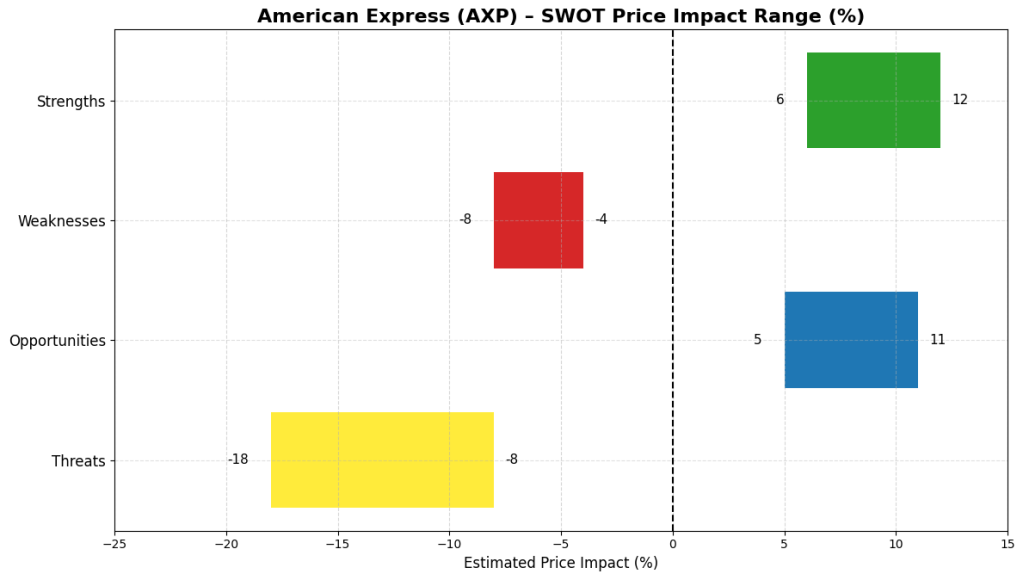
  • Affluent customer base with resilient Travel & Entertainment spending, supporting earnings durability (+6% to +12%).
  • Sticky membership model with annual fees and rewards, driving strong lifetime value and pricing power (+4% to +9%).
  • Clear medium-term growth outlook anchored by management’s 2026 guidance (+5% to +10%).

Weaknesses

  • Elevated marketing and reward investments can pressure margins and lead to small EPS misses (−4% to −8%).
  • Combined network, issuing, and credit exposure makes earnings more sensitive to credit normalization (−3% to −7%).

Opportunities

  • Continued acquisition of Millennials and Gen Z customers enhances long-term earnings power (+5% to +11%).
  • Premium product refreshes can lift engagement, fees, and spending per cardmember (+3% to +8%).

Threats

  • Regulatory scrutiny and policy headlines can weigh on sentiment even without immediate financial impact (−6% to −15%).
  • A macro slowdown could dampen Travel & Entertainment spend and accelerate credit costs (−8% to −18%).
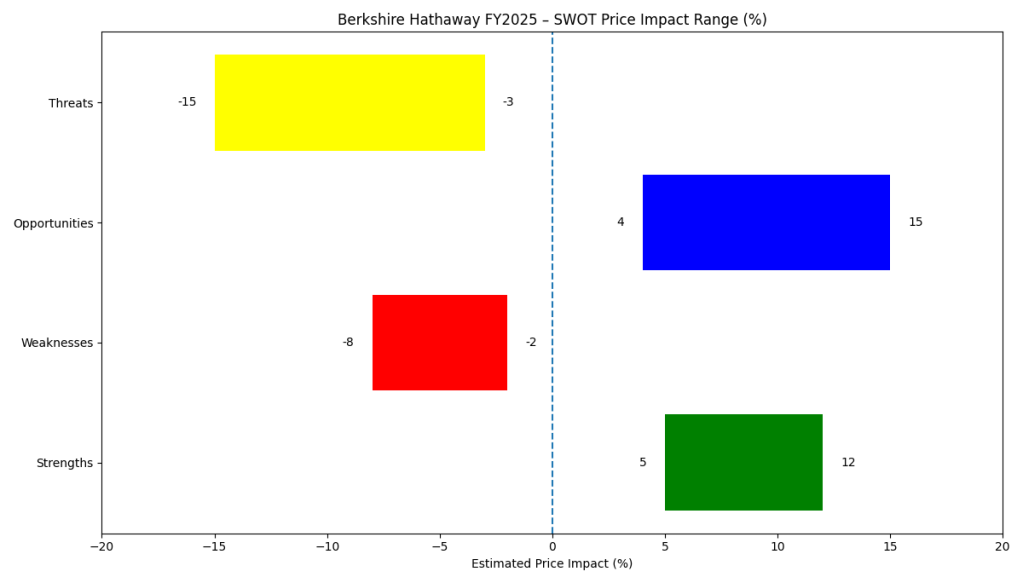
American Express SWOT price impact chart showing estimated upside and downside ranges from strengths, weaknesses, opportunities, and threats after Q4 2025 earnings.
American Express (AXP) SWOT analysis visualizing estimated stock price impact ranges from key strengths, weaknesses, opportunities, and threats based on Q4 2025 earnings.

Valuation Scenarios

Using management’s 2026 EPS guidance and a range of reasonable valuation multiples, the stock’s upside and downside can be framed as follows.

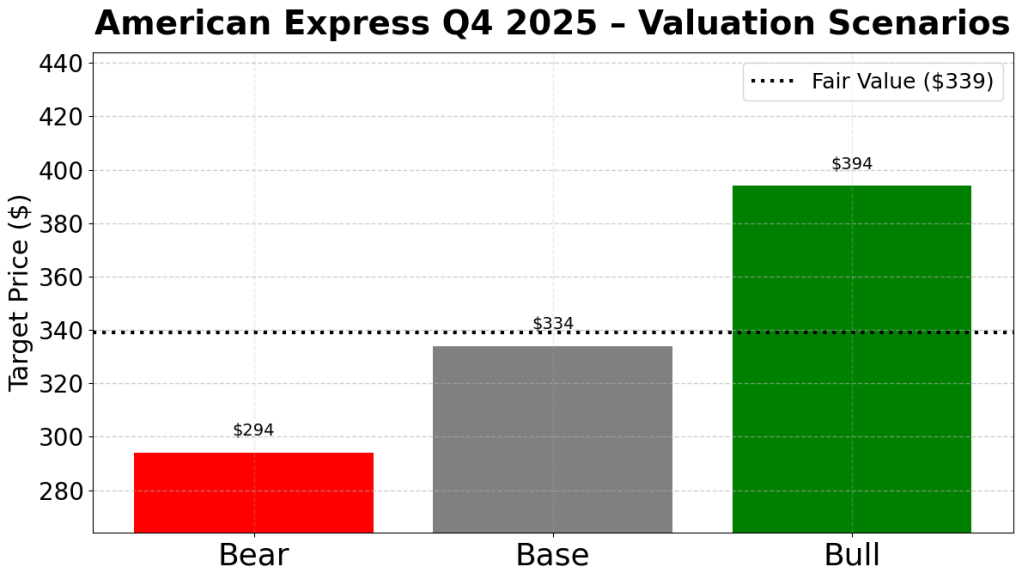
Bear Case

  • EPS at the low end of guidance with multiple compression.
  • Implied value around $294, reflecting credit and cost concerns.

Base Case

  • Midpoint EPS with a normalized premium multiple.
  • Implied value around $334, assuming steady execution and controlled investments.

Bull Case

  • High-end EPS with multiple expansion driven by premium growth re-rating.
  • Implied value around $394, assuming strong affluent spending and operating leverage.

Probability-weighted fair value

  • Combining these scenarios yields a fair value estimate of around $340.
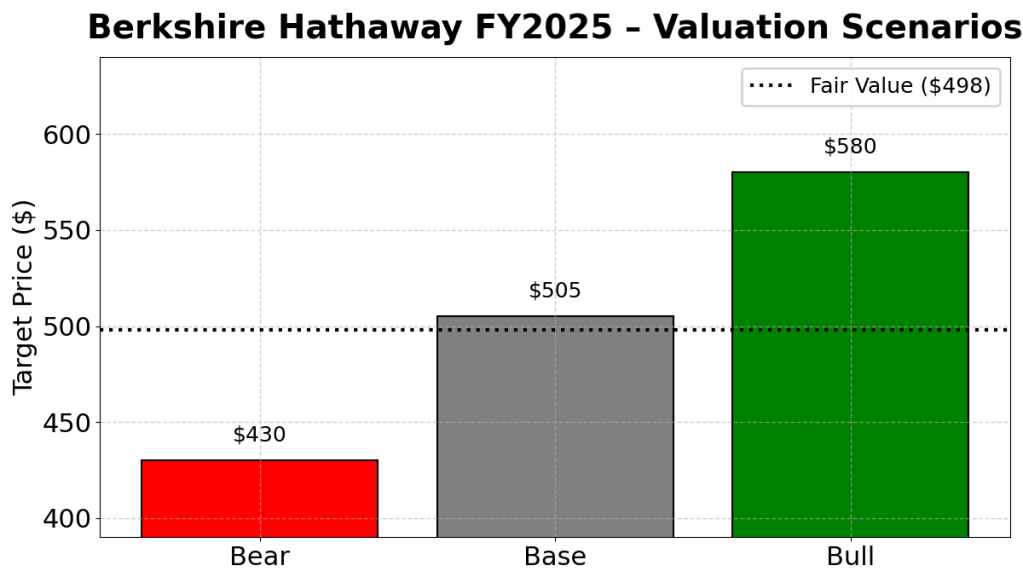
American Express valuation scenarios chart showing bear, base, and bull price targets with a probability-weighted fair value after Q4 2025 earnings.
American Express (AXP) valuation scenarios illustrating bear, base, and bull price targets and the probability-weighted fair value based on Q4 2025 earnings.

Verdict

American Express remains a best-in-class consumer finance franchise with durable growth drivers and strong capital returns. However, at current prices, much of that quality is already reflected in the stock. For value-oriented investors, the shares look fair to slightly expensive, with a more attractive entry point likely emerging during periods of market volatility or macro-driven pullbacks.


Call to Action

If you’re tracking high-quality financial stocks through the cycle, follow SWOTstock for clear, earnings-driven analysis that separates long-term fundamentals from short-term noise.


Disclaimer

This article is for informational and educational purposes only and does not constitute investment advice. Investors should conduct their own research and consider their financial situation and risk tolerance before making investment decisions.


Morgan Stanley Q4 2025 Earnings: Investment Banking Is Back, but Is the Stock Fully Priced?

Morgan Stanley’s Q4 2025 earnings surpassed expectations, driven by investment banking recovery and stable wealth management. The firm achieved record profits, with an estimated fair value of $180 per share, indicating limited upside post-rally. Despite strengths in diversified revenue, the stock appears fairly valued against market risks and economic conditions.

TL;DR Summary

  • Morgan Stanley (MS:NYSE) delivered a strong Q4 2025, driven by a sharp rebound in investment banking and steady wealth management growth.
  • Full-year profitability and returns remain well above cost of capital, reinforcing MS as a high-quality franchise.
  • However, after a post-earnings rally, the stock looks close to fair value rather than clearly cheap.
  • Fair value estimate: around $180 per share, implying limited upside at current levels unless the deal cycle stays strong.

Quarter Recap

Morgan Stanley reported Q4 2025 results that clearly exceeded market expectations. Net revenues rose meaningfully year-over-year, with earnings boosted by a recovery in advisory and underwriting activity. Wealth Management continued to provide a stable backbone, while Institutional Securities re-accelerated as capital markets activity improved into year-end.

The earnings release confirmed that FY2025 was a record year for the firm in terms of revenues and earnings, validating the long-term strategy of building a more balanced, fee-driven business alongside cyclical market activities.


Key Highlights

  • Q4 net revenues: $17.9B, up solidly year-over-year
  • Q4 EPS: $2.68
  • FY2025 EPS: $10.21 (record)
  • ROTCE: ~22%, firmly above historical averages
  • CET1 capital ratio: ~15%, supporting dividends and buybacks
  • Wealth Management revenues: $8.4B in Q4, reflecting durable fee income
  • Investment Banking revenues: sharply higher year-over-year, signaling a deal-cycle rebound

SWOT Analysis

Morgan Stanley’s Q4 results highlight the strength of its integrated model: a resilient wealth management base combined with cyclical upside from investment banking. The following SWOT translates these drivers into estimated valuation impacts.

Strengths

  • High-quality earnings power and profitability driven by diversified businesses and ~22% ROTCE. (Estimated impact: +6% to +12%)
  • Wealth Management scale and stickiness, with large fee-based assets providing earnings stability. (+5% to +10%)
  • Clear rebound in investment banking, supporting upside to normalized earnings. (+4% to +9%)
  • Strong capital position (CET1 ~15%), enabling consistent capital returns. (+2% to +5%)

Weakness

  • Earnings remain market-sensitive, particularly in trading and underwriting. (−2% to −6%)
  • Rising technology and execution costs, which could pressure margins if they become structural. (−2% to −5%)
  • Isolated credit noise, including CRE-related charge-offs, reminds investors of tail risks. (−1% to −3%)

Opportunities

  • Sustained deal-cycle recovery could keep Institutional Securities returns elevated. (+4% to +10%)
  • Further shift toward fee-based wealth revenues enhances durability and valuation quality. (+3% to +8%)
  • Operating leverage, as incremental revenues flow through at higher margins. (+2% to +6%)

Threats

  • A reversal in capital markets sentiment could quickly compress revenues and multiples. (−6% to −15%)
  • Regulatory or capital rule changes that reduce returns on equity. (−3% to −8%)
  • Cost inflation becoming structural, limiting valuation re-rating. (−2% to −7%)
SWOT price impact chart for Morgan Stanley Q4 2025, illustrating strengths, weaknesses, opportunities, and threats with estimated share price impact ranges from −20% to +15%.
Morgan Stanley Q4 2025 SWOT analysis showing estimated price impact ranges. Strengths and opportunities reflect investment banking recovery and wealth management durability, while weaknesses and threats capture market cyclicality and downside risks.

Valuation Scenarios

For Morgan Stanley, valuation is best anchored on tangible book value and returns on equity. With tangible book value per share around $50, different P/TBV multiples reflect how much premium the market assigns to a ~20%+ ROTCE franchise.

Bear case (~$160)

  • Deal activity cools and market conditions soften.
  • Valuation compresses toward a more conservative quality-bank multiple.

Base case (~$180)

  • Wealth Management remains stable and investment banking normalizes.
  • MS sustains premium returns without further multiple expansion.

Bull case (~$200)

  • Deal momentum persists and the integrated-firm narrative strengthens.
    • Market assigns a top-tier multiple to durable earnings power.

Probability-weighted fair value: ~$180 per share.

Valuation scenarios chart for Morgan Stanley Q4 2025 with three bars showing bear case at $160, base case at $180, and bull case at $200, alongside a dotted fair value line at $180.
Morgan Stanley Q4 2025 valuation scenarios showing bear, base, and bull price targets. The probability-weighted fair value centers around $180 per share, highlighting limited upside after the post-earnings rally.

Verdict

Morgan Stanley remains a best-in-class financial franchise, and Q4 2025 confirms that its diversified model works when markets recover. However, after the post-earnings rally, the stock appears fairly valued rather than obviously undervalued.

For long-term, value-oriented investors:

  • Above ~$190: upside looks limited unless the deal cycle stays unusually strong.
  • Around ~$180: valuation is reasonable for a high-quality compounder.
  • Below ~$165: the stock would begin to offer a more compelling margin of safety.

Call to Action

If you found this breakdown useful, follow SWOTstock for clear, fundamentals-driven earnings analysis that cuts through the noise and focuses on valuation, risk, and long-term returns.


Disclaimer

This article is for informational purposes only and does not constitute investment advice. All analysis is based on publicly available company disclosures. Investors should conduct their own research or consult a financial professional before making investment decisions.

Wells Fargo Q4 2025 Earnings — Capital Returns Doing the Work, Not Growth

Wells Fargo’s Q4 2025 results indicate a shift from turnaround efforts to stable, capital-driven profitability, with earnings exceeding expectations. However, concerns over declining net interest income suggest limited growth potential. Capital returns remain strong, but macro conditions will dictate future valuation. The stock is currently a hold for cautious investors.

TL;DR Summary

Wells Fargo’s (WFC:NYSE) Q4 2025 results confirmed that the bank has largely exited its turnaround phase and entered a period of normalized, capital-driven value creation. Earnings exceeded expectations, profitability targets were raised, and shareholder returns accelerated meaningfully. However, softer net interest income guidance underscored that earnings growth will remain constrained by the rate environment. At around the high-$80s per share, the stock appears fairly valued with modest upside, driven primarily by buybacks rather than revenue momentum. Wells Fargo is no longer repairing — but it is also not re-rating aggressively yet.


Quarter Recap

Wells Fargo reported Q4 2025 earnings that reinforced the durability of its earnings base while clarifying the limits of near-term growth. Results benefited from continued cost discipline and strong capital deployment, allowing the bank to deliver an earnings beat despite a more challenging net interest income backdrop.

Management used the quarter to recalibrate investor expectations. While acknowledging ongoing pressure on net interest income, leadership emphasized that Wells Fargo has now achieved sufficient operational and regulatory stability to focus on normalized profitability and shareholder returns. The quarter marked a shift away from remediation narratives toward disciplined capital allocation, even as the pace of earnings expansion remains tied to macro conditions.


Key Highlights

  • Management raised its medium-term ROTCE target to 17–18%, signaling confidence in sustainable profitability
  • FY2025 capital returns of approximately $23B, including ~$18B in share buybacks
  • Net interest income declined, with forward guidance indicating continued pressure into 2026
  • Credit performance remained stable, with no material deterioration in asset quality
  • Capital ratios stayed comfortably above regulatory requirements, preserving flexibility

SWOT Analysis

Wells Fargo’s Q4 results reinforce a clear conclusion: the investment case is no longer about fixing the franchise, but about how much value can be created through capital returns in a constrained growth environment.

Strengths

Wells Fargo’s improving profitability profile and aggressive capital return program now anchor the equity story. The decision to raise the ROTCE target reflects confidence that the bank’s earnings power is structurally higher than in prior cycles. Large-scale buybacks at or near intrinsic value materially enhance per-share value and provide downside support even in a slow-growth scenario. Balance-sheet strength and disciplined risk management further reinforce earnings durability.

Estimated price impact: +8% to +12%


Weaknesses

Net interest income remains under pressure as asset yields reset faster than deposit costs can adjust, limiting operating leverage. While cost controls have improved, revenue growth remains heavily rate-dependent, constraining near-term upside. The reliance on capital returns rather than organic growth also caps the stock’s re-rating potential in the absence of a more favorable rate backdrop.

Estimated price impact: −6% to −10%


Opportunities

Sustained execution toward the newly raised ROTCE target could gradually improve investor confidence and support modest multiple expansion. Continued buybacks represent a powerful compounding mechanism, particularly if shares remain priced near intrinsic value. Incremental recovery in fee-based businesses, including wealth and card services, offers optional upside not fully reflected in current expectations.

Estimated price impact: +7% to +12%


Threats

The primary risks remain macro-driven. Faster-than-expected rate cuts would extend net interest income pressure, delaying earnings normalization. A material economic slowdown could push credit costs higher, overwhelming incremental efficiency gains. Regulatory intervention also remains a structural risk, even if less acute than in prior years.

Estimated price impact: −7% to −14%

Capital returns and profitability targets drive upside, while net interest income pressure and macro risks cap near-term re-rating.

Valuation Scenarios

Wells Fargo is best valued using a normalized profitability and capital-return framework, rather than quarter-to-quarter earnings volatility. The scenarios below illustrate how different macro and execution paths could shape valuation outcomes.

Bear Scenario

This scenario assumes prolonged net interest income pressure combined with rising credit costs, limiting earnings growth and keeping valuation anchored near historical lows.

  • Assumptions: Continued NII decline into 2026; higher credit costs; slower buyback pace
  • Implied value: ~$70–75

Base Scenario

This reflects the current market consensus: net interest income stabilizes, credit remains well-behaved, and capital returns continue at scale.

  • Assumptions: Mid-to-high-teens ROTCE; stable credit; sustained buybacks
  • Implied value: ~$88–95

Bull Scenario

This scenario assumes a more supportive rate environment, fee income recovery, and faster progress toward profitability targets, enabling modest multiple expansion.

  • Assumptions: NII stabilization; strong capital returns; gradual re-rating
  • Implied value: ~$105–110

Probability-Weighted Fair Value

Across scenarios, Wells Fargo’s fair value clusters around:

~$90–95 per share

Valuation scenarios bar chart for Wells Fargo Q4 2025 showing three price targets: Bear case around $73, Base case around $92, and Bull case around $108, with a dotted horizontal line indicating a fair value near $92.
Base-case valuation centers on normalized earnings and sustained capital returns, while upside depends on fee recovery and rate stabilization rather than near-term growth acceleration.

Verdict

Wells Fargo has decisively moved beyond its remediation phase, but it has not yet entered a clear growth-driven re-rating regime. Q4 confirmed improved earnings quality, strong capital returns, and rising profitability targets, yet the stock remains constrained by net interest income headwinds and macro uncertainty.

At current levels, Wells Fargo is best viewed as a hold or incremental accumulate for DIY value investors. The return profile is attractive, but it is driven by capital discipline and patience, not acceleration. The upside case exists — but it will take time.


Call to Action

If you own Wells Fargo, the key question is no longer whether the bank is fixed — that question has largely been answered. The real issue is whether capital returns and normalized profitability can compound value while investors wait for the rate cycle to turn. For valuation-aware investors building durable portfolios, Wells Fargo remains relevant — but not urgent.


Disclaimer

This analysis is for informational purposes only and does not constitute investment advice. Always conduct your own research and consider your financial situation before making investment decisions.